


This guide compares 13 one-step prop firm programs across forex and futures, ranked by profit split, consistency rule flexibility, drawdown structure, payout speed, and firm reputation.
- FTMO 1-Step: the longest track record and largest payout history in forex, backed by clear rule documentation and a 90% profit split from the funded stage. Best for traders who prioritize stability over aggressive scaling.
- E8 Pro: the only forex firm combining daily payout access with no consistency rule at the funded stage.
- Goat Funded Trader: refunds 100% of the challenge fee after passing, the only fully refundable option on this list.
- The5ers Hyper Growth: doubles account size at every 10% profit milestone, scaling up to $4,000,000.
- Topstep: the longest track record in futures, operating continuously since 2012 and paying out an estimated $300M or more, with payouts processed in a steady 1 to 3 business days after clearing 5 winning days.
- Tradeify Select Daily: takes the opposite approach, pairing an EOD trailing drawdown with same-day payout access for traders who prioritize speed over tenure.
- For futures markets, Tradeify’s Select Daily and Alpha Futures Premium offer the most flexible payout paths without requiring a consistency rule on the core evaluation tracks.
The table below breaks down all 13 firms side by side, so you can shortlist by the rule that matters most to your trading style before reading the full breakdown below.
| Firm | Profit Split | Coupon Code | Actions |
|---|---|---|---|
 4.8 (49,700+ reviews) | 80% – 90% | No code | Visit Official Website |
 4.5 (78,300+ reviews) | 80% – 95% | No code | Visit Official Website |
 4.5 (66,300+ reviews) | 80% – 100% | 30a78cd4 | Open an account |
 4.9 (35,600+ reviews) | 50% – 100% | NAXW1ULCR | Open an account |
 4.4 (3,200+ reviews) | 80% – 100% | H2T01 | Open an account |
 4.5 (2,600+ reviews) | 80% – 100% | H2tmedia | Open an account |
 3.5 (4,200+ reviews) | 80% – 100% | h2t | Open an account |
 4.2 (1,600+ reviews) | 80% – 100% | No code | Visit Official Website |
 3.9 (1,100+ reviews) | 90% – 100% | No code | Open an account |
 4.4 (14,600+ reviews) | 90% – 100% | No code | Visit Official Website |
 4.5 (5,700+ reviews) | 70% – 90% | H2T | Open an account |
 4.6 (4,000+ reviews) | 90% | No code | Visit Official Website |
 4.7 (2,700+ reviews) | 90% | No code | Visit Official Website |
H2T Funding verified all rules directly from each firm’s official Help Center, rulebook, and pricing pages, cross-checked and updated in June 2026 to reflect current account conditions, payout policies, and risk management requirements.
Key benefits of a one-step evaluation:
- Faster funding: skip the second phase and reach a funded account in less time
- Simpler rules: track one profit target instead of multiple milestones
- Streamlined risk: clear drawdown limits without multi-tier hurdles
Note:
- OneUp Trader: “Day 1” refers to payout eligibility after passing the funded evaluation; the evaluation itself requires at least 10 trading days to complete.
- FundingPips: The standard minimum withdrawal is 1% of your starting account balance, which increases to 2% of the account size if you utilize their 1-Step on-demand payout feature.
Who Should Choose Which Firm
- If fast payouts are your priority, E8 Pro (forex) offers daily withdrawals from just 1% profit with no consistency rule, while Tradeify Select Daily (futures) provides similar daily access with an EOD trailing drawdown that does not tighten intraday.
- If news trading is central to your strategy, FundedNext allows news trading in both challenge and funded phases, although profits earned during designated news windows are paid at a reduced 40% split.
- If you want to avoid daily loss limits, City Traders Imperium stands out as the only forex firm on this list without a daily drawdown rule, relying solely on a 5% trailing drawdown.
- If minimizing upfront costs matters most, Goat Funded Trader refunds 100% of the challenge fee after passing and offers a Pay Later option. For futures traders, OneUp Trader’s subscription model can be more cost-effective than repeatedly purchasing new evaluations.
- If your goal is long-term account growth, The5ers Hyper Growth doubles account size at every 10% profit milestone and can scale up to $4 million, though the first payout requires a 14-day wait.
- If you need more intraday flexibility in futures trading, Tradeify and Alpha Futures use EOD or static drawdown models, while OneUp Trader offers additional room to recover from losing sessions without a daily loss limit.
You Found Your One-step Challenge. Now Pay Less for It.
Before you sign up, check if your chosen firm has an active discount code – most firms on this list have one available.
2. Detailed Reviews: Best One-Step Forex Prop Firm Challenges
Each of the 9 forex firms below is reviewed against the same criteria used in the comparison above, so you can see exactly why each firm earned its rank. The reviews follow the same order as the table, starting with FTMO, the firm with the strongest reputation and track record in this group.
FTMO
#1
Account Types
2-step
Trading Platforms
MT4, MT5, cTrader, DXTrade
Profit Target
5% – 10%
Our take on FTMO
FTMO 1-Step carries the reputation of the broader FTMO brand into a single-phase evaluation, backed by a 4.8 Trustpilot rating and one of the longest operating histories among prop firms comparable in this list. Traders keep 80% to 90% of profits under a 10% static drawdown, with a minimum of 4 trading days required per phase.
One feature sets it apart from every other firm compared here: FTMO allows a funded account to be frozen for 7 days up to 6 months, a flexibility none of the other 12 one-step programs in this guide offer. For traders who want FTMO’s established track record without committing to its standard 2-step Challenge, the 1-Step program delivers the same rule discipline and reputation in a faster evaluation format, which is exactly why it earns the top spot in this comparison rather than being included for brand recognition alone.
| 💳 Challenge Fee | €89 – €1,080 |
| 👥 Account Types | 2-step |
| 💰 Profit Split | 80% – 90% |
| 💵 Account Size | $10K – $200K |
| ⏱️ Time Limit | No time limit |
| 🎯 Profit Target | 5% – 10% |
| 📊 Trading Platforms | MT4, MT5, cTrader, DXTrade |
| 🛍️ Asset Types | Forex, Commodities, Indices, Stocks, Crypto |
FundedNext
#2
Account Types
1-step, 2-step, and Instant Funding
Trading Platforms
MT4, MT5, cTrader, Match Trader
Profit Target
4% – 10%
Our take on FundedNext
FundedNext’s Stellar 1-Step runs on a static drawdown model with a 6% maximum loss limit calculated from the initial balance, meaning the floor never moves upward as your account grows. Combined with a 3% daily loss limit and a 10% profit target, traders need just 2 minimum trading days to qualify.
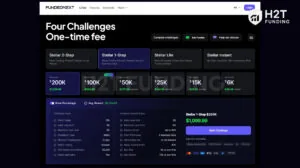
One-Step Programs Overview
- Profit Target: 10%
- Drawdown: 6% static, from initial balance
- Daily Loss Limit: 3%
- Minimum Trading Days: 2 days
- First Reward: After 5 business days
Because the drawdown floor is fixed to the opening balance, a $100K account always maintains the same $94,000 floor, regardless of how much profit accumulates. This removes the equity-chasing pressure common in trailing drawdown models, where a strong early run raises the floor and tightens the effective risk room.
News trading and weekend holding are permitted in both the challenge and funded phases, which gives traders more session flexibility than most one-step programs. Performance Rewards can be withdrawn via USDT (ERC20/TRC20), USDC (ERC20), Confirmo, or RiseWorks, with minimum requests starting from $20, depending on the payout method.
At the funded stage, the News Profit Split Rule changes how news-window gains are counted. Profits from trades opened or closed within 5 minutes before or after a high-impact news event are credited at 40% only; losses in the same window remain fully applied. For those who systematically trade economic releases as a primary strategy, it materially compresses actual payout per cycle.
| 💳 Challenge Fee | $32.99 – $1,099.99 |
| 👥 Account Types | 1-step, 2-step, and Instant Funding |
| 💰 Profit Split | 80% – 95% |
| 💵 Account Size | $2K – $200K |
| ⏱️ Time Limit | No time limit |
| 🎯 Profit Target | 4% – 10% |
| 📊 Trading Platforms | MT4, MT5, cTrader, Match Trader |
| 🛍️ Asset Types | Forex, Indices, Commodities, Crypto, CFDs |
Verdict:
FundedNext combines one-step funding with allowing news trading, weekend holding, and automated tools, while relying on a tighter risk framework to control exposure. Traders who already have disciplined risk management may find that trade-off more valuable than a lower profit target elsewhere.
Funding Pips
#3
Account Types
1-step, 2-step, and Instant Funding
Trading Platforms
MT5, cTrader, Match Trader
Profit Target
5% – 10%
Our take on Funding Pips
FundingPips’ 1-Step uses a static drawdown model with a 6% maximum loss limit from the starting account size and a 3% daily loss limit calculated from the higher of the opening balance or the opening equity that day. Traders need a 10% profit target across at least 3 minimum trading days, with no time limit on the evaluation.
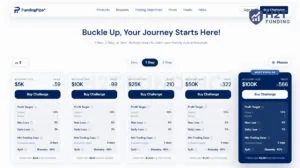
One-Step Programs Overview
- Profit Target: 10%
- Daily Loss Limit: 3% (from the higher of the opening balance or equity)
- Max Loss Limit: 6% from starting account size
- Minimum Trading Days: 3 days
Unlike a fixed 3% from the opening balance, FundingPips measures 3% from whichever is higher, your opening balance or opening equity that day. This creates a tighter effective risk window on strong days, and traders who run wider intraday swings need to account for this when sizing positions.
What makes FundingPips structurally different is the four-tier reward cycle system. Rather than a fixed payout schedule, traders choose between Weekly (60% split), Bi-Weekly (80% split), Monthly (100% split), or On Demand (90% split with a 35% consistency score requirement and minimum 2% profit). The split percentage changes based on how frequently you withdraw.
Additionally, your cash-out flexibility is tied to specific minimum withdrawal thresholds based on your chosen payout frequency. To qualify for a payout, you must request at least 1% of your starting account balance, which increases to a 2% minimum if you utilize the 1-Step on-demand feature.
| 💳 Challenge Fee | $29 – $888 |
| 👥 Account Types | 1-step, 2-step, and Instant Funding |
| 💰 Profit Split | 80% – 100% |
| 💵 Account Size | $5K – $100K |
| ⏱️ Time Limit | No time limit |
| 🎯 Profit Target | 5% – 10% |
| 📊 Trading Platforms | MT5, cTrader, Match Trader |
| 🛍️ Asset Types | Forex, CFD, Metals, Indices, Energy, Crypto |
Verdict:
FundingPips’ payout structure is the clearest differentiator in this list, but it rewards patience, not speed. The trade-off comes from a more restrictive risk framework: the daily loss limit uses the higher of opening balance or equity, while certain Master Account rules can limit weekend holding and news-event profits. Traders with disciplined intraday risk management are likely to adapt well, but swing-oriented traders may find the structure less flexible.
The5ers
#4
Account Types
1-step, 2-step, 3-step
Trading Platforms
MT5, cTrader
Profit Target
5% – 10%
Our take on The5ers
The5ers offers two primary one-step funding programs: Hyper Growth and Pro Growth. Both have a 10% profit target, a 6% static stop-out, a 3% daily pause, and no evaluation time limit. The main difference is that Pro Growth requires 3 minimum profitable days to pass, but has a lower entry fee, while Hyper Growth has no minimum trading-day requirement.
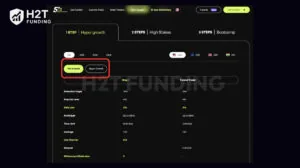
Hyper Growth/ Pro Growth Programs Overview
- Profit target: 10%
- Static stop-out: 6%
- Daily pause (suspends trading, does not close account): 3%
- No minimum trading days, first payout after 14 days
Instead of failing the account after a 3% daily loss, The5ers pauses trading until 00:00 MT5 server time, giving traders another chance while keeping the overall 6% static stop-out unchanged. Because the drawdown is fixed to the initial balance, the loss floor never rises as the account grows, providing more predictable risk limits than trailing drawdown models. The minimum withdrawal amount is $150 after profit split, with payouts available via Rise, bank transfer, crypto, or Hub Credits.
The scaling model doubles the account balance at every 10% profit milestone, from $5K through to $4,000,000. Each level also pays a hub credit bonus on top of the profit split, starting at $15 and reaching $1,600 at higher milestones. The maximum capital per trader across all evaluation accounts is $40,000, meaning the entry path to the scaling ladder is capped at that level before funded accounts take over.
| 💳 Challenge Fee | $19 – $850 |
| 👥 Account Types | 1-step, 2-step, 3-step |
| 💰 Profit Split | 50% – 100% |
| 💵 Account Size | $2.5K – $250K |
| ⏱️ Time Limit | No time limit |
| 🎯 Profit Target | 5% – 10% |
| 📊 Trading Platforms | MT5, cTrader |
| 🛍️ Asset Types | Forex / CFD |
Verdict:
The5ers Hyper Growth stands out for its unique risk model and one of the strongest scaling plans in the prop trading industry. While the first withdrawal is only available after 14 days, and scaling resets the payout cycle, traders who prioritize steadily increasing buying power over frequent withdrawals are likely to find the program particularly attractive.
E8 Funding
#5
Account Types
1-step
Trading Platforms
MT5, cTrader, Match Trader, TradeLocker
Profit Target
6% – 9%
Our take on E8 Funding
E8 Markets offers three distinct one-step programs: E8 Pro, E8 One, and E8 Signature. Although they all provide a one-step path to funding, each program applies a different combination of drawdown rules, payout conditions, and funded-stage requirements.
One-Step Programs Overview
- E8 Pro: 8% profit target, 8% static drawdown, 2.5% daily loss limit, no consistency rule, daily payout from 1% profit, profit split selectable at 80% or 100%
- E8 One: 6% profit target, dynamic trailing drawdown selectable from 4% to 14%, 3% daily loss limit, 40% best-day consistency rule (funded only), first payout from Day 3
- E8 Signature: 6% profit target, EOD dynamic drawdown ($3,000 on $100K), 2% daily pause (funded only), 35% best-day consistency rule (funded only), mandatory payout buffer, first payout from Day 3
E8 Pro’s static floor holds throughout the challenge, but shifts once after the first payout is processed, moving up to the initial balance level. Traders who withdraw early lock in a higher floor before building a larger buffer. Combined with the 2% daily profit cap, reaching the 8% target at maximum pace requires at least 4 trading days.
E8 One and E8 Signature both apply their consistency rules only at the funded stage, not during the challenge. The main distinction is E8 Signature’s mandatory payout buffer, which requires traders to keep an amount equal to the EOD drawdown in the account at all times, reducing the balance available for withdrawal. Across all three programs, funded payouts are processed through Rise or Workmarket, with a minimum withdrawal amount of $100.
| 💳 Challenge Fee | $38 – $2,998 |
| 👥 Account Types | 1-step |
| 💰 Profit Split | 80% – 100% |
| 💵 Account Size | $5K – $500K |
| ⏱️ Time Limit | No time limit |
| 🎯 Profit Target | 6% – 9% |
| 📊 Trading Platforms | MT5, cTrader, Match Trader, TradeLocker |
| 🛍️ Asset Types | Forex, Commodities, Indices, Crypto, Energy, and Futures |
Verdict:
E8 Pro is the only account in this list combining daily payout access with zero consistency rules at the funded stage, but a 2% daily profit cap limits how much any single session contributes. Traders with steady, moderate daily gains benefit most, while large single-day winners see returns compressed under this cap.
Funded Trading Plus
#6
Account Types
1-Step, 2-Step, and Instant Funding
Trading Platforms
MT5, cTrader, Match Trader, DXTrade
Profit Target
7% – 10%
Our take on Funded Trading Plus
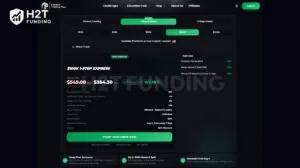
Funded Trading Plus takes a different approach with its 1-Step Express by using a 6% trailing maximum loss based on the account’s balance high-water mark rather than real-time equity. The trailing floor rises as the balance increases and stops moving once it reaches the initial account balance. The program also uses a 4% daily loss limit, a 10% profit target, no minimum trading days, and no time limit.
One-Step Programs Overview
- Profit Target: 10%
- Daily Loss Limit: 4% (balance-based)
- Max Loss: 6% trailing from the high water mark, locks at the initial balance
- Min Trading Days: None
- First Payout: Day 0 (from the first day of the funded account)
The limit tracks balance rather than floating equity; unrealized intraday gains do not immediately tighten the risk floor. This creates a more forgiving version of trailing drawdown than many competing one-step programs. After the account grows enough for the trailing floor to lock at the starting balance, the drawdown effectively becomes static, giving traders a fixed risk buffer for the remainder of the account.
Rewards are available from day zero of the funded account, with subsequent requests every 7 days. The profit split starts at 80% and increases as the simulated balance grows toward 100%, without requiring a paid add-on. Funded traders can withdraw via bank transfer or cryptocurrency, with a minimum withdrawal request of $50. News trading and weekend holding are both permitted, and there are no soft rules: only the daily loss limit and maximum loss limit can breach the account.
| 💳 Challenge Fee | $89 – $4,499 |
| 👥 Account Types | 1-Step, 2-Step, and Instant Funding |
| 💰 Profit Split | 80% – 100% |
| 💵 Account Size | $5K – $200K |
| ⏱️ Time Limit | No time limit |
| 🎯 Profit Target | 7% – 10% |
| 📊 Trading Platforms | MT5, cTrader, Match Trader, DXTrade |
| 🛍️ Asset Types | Forex, Indices, Commodities, Metals, Crypto |
Verdict:
The locked trailing drawdown is what sets this account apart. Once the floor reaches the starting balance, the account effectively behaves like a static drawdown model, creating a more stable risk structure over time. For those who can manage the transition, the combination of day-one payout eligibility and a locked drawdown floor creates one of the more trader-friendly one-step structures available.
Goat Funded Trader
#7
Account Types
1-step, 2-step, 3-step, and instant funding
Trading Platforms
MT5, Match Trader, TradeLocker, Volumetricatrading
Profit Target
6% – 10%
Our take on Goat Funded Trader
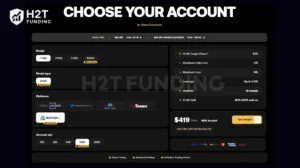
Goat Funded Trader’s 1-Step GOAT model features a 6% static maximum loss fixed from the initial account size and a 4% daily drawdown, with both limits remaining unchanged after funding. The 10% profit target requires 3 minimum valid trading days, where a valid day is defined as any day with at least 0.5% profit on the initial balance.
One-Step Programs Overview
- Profit Target: 10%
- Daily Drawdown: 4% from the higher of balance or equity at 5 PM EST
- Max Overall Loss: 6% static from initial account size
- Min Valid Trading Days: 3 days (≥0.5% profit per day)
- First Payout: Bi-weekly, minimum 3 valid trading days required
The daily drawdown resets at 5:00 PM EST based on the higher of the account balance or equity. This means unrealized profits at the reset can raise the next day’s loss limit before they are actually realized, making overnight positions an important consideration.
Once funded, the GOAT model limits realized profits to $3,000 per trading day. Any profit above the cap is removed, but does not count as a rule violation. The first two payouts are also capped at 6% of the initial balance or $10,000, whichever is lower, with both restrictions removed after the second successful withdrawal. Reward requests require a minimum of $100 and can be paid via Rise, Crypto, or Skrill, with processing typically completed within two business days.
Traders looking for a lower upfront cost can choose the Pay Later option, which requires only $5 to start. It uses a 4% profit target and 8% trailing drawdown during evaluation, with the remaining challenge fee due only after passing.
| 💳 Challenge Fee | $36 – $3,048 |
| 👥 Account Types | 1-step, 2-step, 3-step, and instant funding |
| 💰 Profit Split | 80% – 100% |
| 💵 Account Size | $2.5K – $400K |
| ⏱️ Time Limit | No time limit |
| 🎯 Profit Target | 6% – 10% |
| 📊 Trading Platforms | MT5, Match Trader, TradeLocker, Volumetricatrading |
| 🛍️ Asset Types | Forex, Commodities, Indices, Crypto, Metals, Energy, Stocks |
Verdict:
Goat Funded Trader’s pricing model is built around a simple tradeoff: a refundable challenge fee in exchange for a daily profit cap on funded accounts. If you trade with consistent, moderate daily returns, the cap is unlikely to affect your payouts. If your edge comes from infrequent but high-return sessions, however, it can limit realized profits even when your overall performance remains well within the firm’s risk parameters.
City Traders Imperium
#8
Account Types
1-step, 2-step, and Instant Funding
Trading Platforms
MT5, Match Trader
Profit Target
5% -10%
Our take on City Traders Imperium
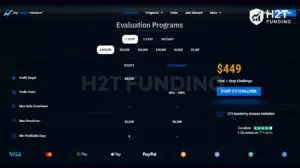
City Traders Imperium’s 1-step combines a 5% trailing drawdown with no daily loss limit, making overall drawdown management the primary risk constraint. The challenge also features an 8% profit target – lower than the 10% required by most forex programs in this list, although traders must complete at least 3 profitable days. For funded accounts, payouts are available on demand after seven profitable trading days with a minimum 2% net profit.
One-Step Programs Overview
- Profit Target: 8%
- Max Trailing Drawdown: 5% from the high water mark
- Daily Drawdown Limit: None
- Min Profitable Days: 3 days
- First Payout: On demand after 7 profitable days + 2% net profit
The absence of a daily drawdown limit is the structural differentiator here. Most 1-step programs restrict both total and daily loss; CTI removes the daily constraint entirely, leaving only the trailing floor as the active risk boundary. A trader who loses 4% in a single session does not breach the account, provided the trailing floor has not been touched.
Combined with the 8% profit target, the practical pass window is wider than most programs in this list, and the unlimited reset discount of 30% removes some financial pressure from failed attempts. Approved payouts are transferred through the CTI Wallet and can be withdrawn via bank transfer or crypto, subject to a $100 minimum withdrawal, with withdrawal requests typically processed within one business day.
| 💳 Challenge Fee | $29 – $3,999 |
| 👥 Account Types | 1-step, 2-step, and Instant Funding |
| 💰 Profit Split | 80% – 100% |
| 💵 Account Size | $2,5K – $100K |
| ⏱️ Time Limit | No time limit |
| 🎯 Profit Target | 5% -10% |
| 📊 Trading Platforms | MT5, Match Trader |
| 🛍️ Asset Types | Forex, Metals, Indices, Energy, Crypto, Commodities |
Verdict:
City Traders Imperium offers one of the most flexible 1-step evaluations by combining an 8% profit target with no daily drawdown limit. The tradeoff is its 5% trailing drawdown, which leaves less room for large equity swings than a static drawdown model. As a result, CTI is better suited to disciplined traders who keep losses consistent rather than those who rely on recovering from deeper drawdowns over multiple sessions.
AquaFunded
#9
Account Types
1-step, 2-step, 3-step, and Instant Funding
Trading Platforms
MT5, TradeLocker, Match Trader, cTrader
Profit Target
5% – 10%
Our take on AquaFunded
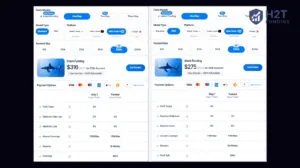
AquaFunded offers two 1-Step tracks: Standard (9% profit target, 3 minimum trading days) and PRO (6% profit target, 5 minimum trading days). Both use a 6% trailing drawdown that locks permanently once the account reaches 6% profit from the starting balance, and a 3% daily loss limit calculated from the higher of balance or equity at 00:00 UTC.
One-Step Programs Overview
- Standard: 9% profit target, 6% trailing drawdown (locks at starting balance after 6% profit), 3% daily loss limit, 3 minimum trading days (≥0.5% profit per day), bi-weekly payout
- PRO: 6% profit target, 6% trailing drawdown (locks at starting balance after 6% profit), 3% daily loss limit, 5 minimum trading days (≥0.5% profit per day), bi-weekly payout
The trailing drawdown follows the highest recorded balance or equity rather than resetting on a schedule, meaning a single strong trading session immediately raises the drawdown floor. Once the trailing threshold reaches the starting balance, it effectively becomes a static drawdown. Meanwhile, the daily drawdown resets at 00:00 UTC based on the higher of the account balance or equity.
Payout requests require a minimum of $100. Rewards below $1,000 are paid via crypto, while payouts of $1,000 or more can be processed through Rise (bank transfer or crypto). AquaFunded also guarantees approved payouts within 24 business hours.
Overall, the Standard track is better suited to traders who expect to reach the profit target quickly, while the PRO track offers a lower target in exchange for a longer minimum evaluation period, making it a better fit for traders who value additional flexibility over speed.
| 💳 Challenge Fee | $29 – 2,099 |
| 👥 Account Types | 1-step, 2-step, 3-step, and Instant Funding |
| 💰 Profit Split | 90% – 100% |
| 💵 Account Size | $2,5K – $400K |
| ⏱️ Time Limit | No time limit |
| 🎯 Profit Target | 5% – 10% |
| 📊 Trading Platforms | MT5, TradeLocker, Match Trader, cTrader |
| 🛍️ Asset Types | Forex, Indices, Commodities, Crypto |
Verdict:
AquaFunded’s payout structure favors traders who can reach the 6% lock-in threshold early. The main trade-off is the 25% consistency rule on the PRO track, so you’ll need to build additional profits before becoming eligible for a withdrawal. This is unlikely to affect traders with steady, consistent performance, but it can become a recurring limitation for those who rely on large gains from high-impact market events.
3. Detailed Reviews: Best One-Step Futures Prop Firm Challenges
Each of the 4 futures firms below is reviewed against the same criteria used in the comparison above. The reviews follow the same order as the table, starting with Topstep, the longest-tenured firm in this group, operating since 2012.
Topstep
#10
Account Types
2-step
Trading Platforms
TopstepX
Profit Target
6%
Our take on Topstep
| 💳 Challenge Fee | $49 – $229 |
| 👥 Account Types | 2-step |
| 💰 Profit Split | 90% – 100% |
| 💵 Account Size | $50K – $150K |
| ⏱️ Time Limit | No time limit |
| 🎯 Profit Target | 6% |
| 📊 Trading Platforms | TopstepX |
| 🛍️ Asset Types | Futures Contracts |
Alpha Futures
#11
Account Types
1-step
Trading Platforms
Tradovate, Quantower, TradingView, NinjaTrader, WealthCharts, DeepCharts
Profit Target
6% – 8%
Our take on Alpha Futures
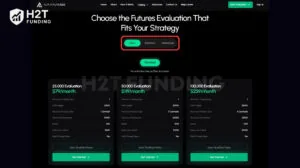
Alpha Futures offers three 1-step evaluation tracks: Zero, Premium, and Advanced – structured around different combinations of daily loss guard, consistency rules, and payout caps. All three share the same core payout mechanic: up to 4 withdrawals per month, triggered after every 5 winning days with at least $200 daily profit, with a maximum of 50% of account profit per request at 90% split.
One-Step Programs Overview
- Zero: 6% profit target, 4% static drawdown, 2% daily loss guard, 40% consistency rule (qualified only), 2-min news restriction around red events, first payout every 5 winning days
- Premium (Standard/ No activation fee): 6% profit target, 4% static drawdown, no daily loss guard, no consistency rule, news trading restricted, first payout every 5 winning days
- Advanced: 8% profit target, 3.5% static drawdown, no daily loss guard, no consistency rule, no news trading restrictions, first payout every 5 winning days
Traders who value flexibility can choose Advanced, which removes the daily loss limit and pays a full 90% profit split from the outset. Premium offers a lower-cost entry with a gradual increase in profit share, whereas Zero eliminates the activation fee while imposing tighter consistency and funded trading requirements. Because every program uses a static drawdown, traders avoid the shrinking loss buffer commonly associated with trailing drawdown models, making long-term risk management more straightforward.
Traders can request up to 50% of their account profit per payout cycle, with the remainder retained as a drawdown buffer. Payouts are available via Rise, Wise, or bank transfer (Wire, ACH, SWIFT), with minimum withdrawals starting from $200 on Zero, $500 on Premium, and $1,000 on Advanced accounts. Advanced accounts also have a $15,000 per-request payout cap.
| 💳 Challenge Fee | $79 – $419 |
| 👥 Account Types | 1-step |
| 💰 Profit Split | 70% – 90% |
| 💵 Account Size | $25K – $150K |
| ⏱️ Time Limit | No time limit |
| 🎯 Profit Target | 6% – 8% |
| 📊 Trading Platforms | Tradovate, Quantower, TradingView, NinjaTrader, WealthCharts, DeepCharts |
| 🛍️ Asset Types | Futures Contracts |
Verdict:
Alpha Futures gives traders genuine choices instead of minor variations of the same account. Advanced is the strongest option for flexibility, Premium prioritizes affordability, and Zero appeals to traders looking to reduce upfront costs without sacrificing a high profit split.
Tradeify
#12
Account Types
1-step and instant funding
Trading Platforms
Tradovate, TradingView, NinjaTrader, WealthCharts, Rithmic, Tradesea, Quantower
Profit Target
6%
Our take on Tradeify
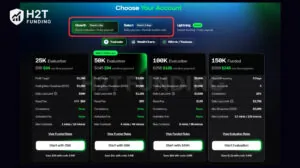
Tradeify offers two 1-step evaluation tracks: Growth (funded in 1 day, no consistency rule at evaluation) and Select (funded in 3 days, 40% consistency rule at evaluation). Both use end-of-day trailing drawdown; the floor adjusts only at the end of each trading session, meaning intraday losses do not tighten the risk boundary in real time.
One-Step Programs Overview
- Growth – 6% profit target, 3.33%-4% EOD trailing drawdown, ~2.5% daily loss limit (soft breach), no consistency rule at evaluation, first payout after 5 eligible winning days
- Select – 6% profit target, 3%-4% EOD trailing drawdown, no daily loss limit, 40% consistency rule at evaluation, first payout after 5 winning days (Flex) or daily (Daily).
Growth and Select diverge most at the funded stage. Growth-funded accounts apply a 35% consistency rule and require the account balance to exceed the starting balance by a set threshold before a payout qualifies. Select funded accounts offer a permanent path choice after passing: Select Flex (5-day cycle, no daily loss limit, larger per-payout caps) or Select Daily (daily eligibility, buffer requirement maintained at all times, smaller per-payout caps with a daily loss limit applied).
The EOD trailing drawdown is the operational advantage across both tracks. Because the floor only moves at the end-of-day settlement rather than tracking real-time equity, a trader who is down intraday but recovers before session close does not see the drawdown floor affected at all. This gives futures traders more room to manage positions through volatile intraday moves without the floor tightening against them mid-session.
Tradeify primarily processes payouts through Rise, while Plane is available as an alternative for traders who cannot use Rise because of regional restrictions or account issues. Minimum withdrawal amounts vary by funded account type, ranging from $250 to $1,500.
| 💳 Challenge Fee | $99 – $796 |
| 👥 Account Types | 1-step and instant funding |
| 💰 Profit Split | 90% |
| 💵 Account Size | $25K – $150K |
| ⏱️ Time Limit | No time limit |
| 🎯 Profit Target | 6% |
| 📊 Trading Platforms | Tradovate, TradingView, NinjaTrader, WealthCharts, Rithmic, Tradesea, Quantower |
| 🛍️ Asset Types | Futures Contracts |
Verdict:
Growth rewards traders who prefer a simpler evaluation but are comfortable meeting consistency requirements. Select, meanwhile, gives traders a permanent choice between larger, less frequent payouts or faster daily access to profits. Combined with its end-of-day trailing drawdown, Tradeify is best suited to futures traders who hold positions through intraday volatility rather than aiming for quick, single-session gains.
OneUp Trader
#13
Account Types
1-step
Trading Platforms
NinjaTrader 8, R | Trader Pro, AgenaTrader, Bookmap, MotiveWave, Trade Navigator, Volfix, Sierra Chart, Jigsaw Trading, MultiCharts, Photon, InsideEdge
Profit Target
6%
Our take on OneUp Trader
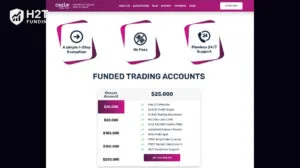
OneUp Trader runs a subscription-based 1-step evaluation; traders pay a monthly subscription instead. The evaluation uses a trailing drawdown that locks permanently once it reaches the initial starting balance, no daily loss limit, and no minimum trading days. Once funded, traders keep 100% of the first $10,000 in profits, then 90% on all profits above that threshold.
One-Step Programs Overview
- Profit Target: 6%
- Trailing Drawdown: 2.2%-6.0% (varies by account size)
- Daily Loss Limit: None
- Min Trading Days: None
- First Reward: From day 1 of the funded account
Once the account grows enough for the trailing floor to reach the initial starting balance, the drawdown locks permanently, removing the risk of the floor rising further as profits accumulate. Unlike most trailing models, where a strong run continuously tightens the floor, OneUp’s floor stabilizes once it hits the entry level.
Withdrawals become available from day one after traders pass the one-step evaluation and receive a funded account, with no minimum holding period. And that requires a minimum trader profit share of $1,000, which can be paid via bank wire or cryptocurrency. The first withdrawal is subject to a profit threshold that scales with account size; for example, a $100K account must generate $3,500 in profit before the initial payout request.
During the evaluation, traders must complete a minimum of 10 trading days to qualify for funding. Once funded, traders can manage up to three accounts simultaneously through NinjaTrader or Rithmic’s R|Trader Pro without switching between platforms.
| 💳 Challenge Fee | $65 – $325 |
| 👥 Account Types | 1-step |
| 💰 Profit Split | 90% |
| 💵 Account Size | $25K – $250K |
| ⏱️ Time Limit | No time limit |
| 🎯 Profit Target | 6% |
| 📊 Trading Platforms | NinjaTrader 8, R | Trader Pro, AgenaTrader, Bookmap, MotiveWave, Trade Navigator, Volfix, Sierra Chart, Jigsaw Trading, MultiCharts, Photon, InsideEdge |
| 🛍️ Asset Types | Futures Contracts |
Verdict:
The no-daily-drawdown structure of One-Up Trader rewards traders who can absorb individual session losses without compounding them across days. The trailing floor is the only active constraint, and it locks once the account clears the entry balance. For futures traders who want maximum intraday flexibility without a per-attempt fee structure, OneUp offers a risk model that few evaluation programs replicate.
4. Cheapest One-Step Challenge Prop Firms – Ranked by Value
A low challenge fee doesn’t always mean you’re getting the best deal. Comparing a $59 challenge for a $5K account with a $99 challenge for a $25K account isn’t meaningful unless both are measured against the amount of funding received.
To make the comparison more objective, we use a cost efficiency ratio:
Challenge Fee ÷ Funded Account Size = Cost per $1 of Buying Power
The lower the ratio, the less you pay for each dollar of simulated capital. This provides a more consistent benchmark than comparing challenge fees alone.
| Rank | Prop Firm | Asset | Challenge Fee | Account Size | Cost per $1K Funded | Hidden Costs / Notes |
|---|---|---|---|---|---|---|
| 1 | Alpha Futures Premium | Futures | $79/month | $50K | $1.58 | Monthly subscription |
| 2 | E8 Pro | CFDs | $38 | $5K | $7.60 | Program-specific payout restrictions |
| 3 | Funded Trading Plus | CFDs | $99 | $10K | $9.90 | Reset fee if evaluation fails |
| 4 | FundedNext | CFDs | $65.99 | $6K | $11.00 | No activation fee |
| 5 | FundingPips | CFDs | $59 | $5K | $11.80 | Reset available after breach |
| 6 | AquaFunded PRO | CFDs | $59 | $5K | $11.80 | Refundable challenge fee |
Cost efficiency is only one part of the equation. Many firms introduce additional costs after registration, including monthly subscriptions, activation fees, reset fees, or payout-related conditions that increase the real cost of becoming funded.
It’s also worth remembering that the cheapest challenge isn’t always the least expensive path to funding. A firm charging $97 with a tight trailing drawdown can easily become more expensive after several failed attempts than a $150 evaluation built around a static drawdown and more forgiving risk rules. Evaluating the challenge fee together with the firm’s risk model often provides a much clearer picture of overall value.
If your primary goal is minimizing upfront costs, we’ve compared dozens of providers by challenge fee, hidden charges, and overall value in our dedicated guide to the cheapest prop firms.
5. One-Step vs Two-Step Challenge – Which Is Right for You?
One-step challenges fund you after a single evaluation, while two-step challenges require passing two separate phases before you trade live capital. That single difference changes your profit target, your drawdown room, your cost if you fail, and how long it takes to reach a funded account. The comparison table below highlights the key differences side by side so you can quickly determine which model fits your trading style and risk tolerance.
| Feature | One-Step Challenge | Two-Step Challenge |
|---|---|---|
| Number of Phases | 1 evaluation stage, funded once passed | 2 stages (evaluation + verification) |
| Profit Target | Typically 8%–11% | Split targets: Phase 1: 8%–10%, Phase 2: 4%–5% |
| Min Trading Days | Often 0–5 days | Usually 0–10 days, split across both phases |
| Time to Funding | Faster, hit the target once | Slower, adds weeks since you repeat the process |
| Drawdown Rules | Often tighter, lower daily limits or trailing drawdown | More forgiving, separate daily and static limits |
| Challenge Fee | Higher upfront fee | Lower challenge fee |
| Best Suited For | Traders with a proven, tested strategy | New traders who want more room to adjust |
Choose one-step if you already have a tested, profitable strategy and want to skip the wait. This model suits traders who:
- Have a track record of consistent results on a demo or live account
- Want to reach a funded account in days, not weeks
- Prefer dealing with one set of rules, not two
- Are comfortable trading under tighter drawdown limits from day one
Choose the two-step if you are still building confidence in your strategy or risk habits. This model suits traders who:
- Are newer to funded trading and want a lower target in Phase 1 to build momentum
- Want separate daily and static drawdown limits as a built-in safety net
- Would rather retry Phase 2 with a smaller target than restart from zero
- Value-proving consistency twice before managing larger capital
If your edge is tested and your risk discipline is tight, a one-step challenge gets you funded faster with fewer hurdles. If you are still refining your approach, a two-step challenge gives you the room to make small mistakes in Phase 1 and still recover in Phase 2.
6. Who Should (and Shouldn’t) Use One-Step Challenges?
One-step challenges fit traders who already have a repeatable edge and want to reach a funded account faster. In most cases, they are harder to pass than comparable two-step challenges because firms compensate for the shorter evaluation with higher profit targets, tighter drawdown limits, or both.
Who should use One-Step Challenge?
A one-step challenge makes sense if you have already demonstrated consistent profitability and do not need multiple evaluation phases to prove your trading process.
You may be a good candidate if you:
- Have been profitable for at least 3 consecutive months
- Want to reach a funded account as quickly as possible
- Prefer one evaluation phase instead of repeating the process twice
- Can realistically target 8%–10% returns without increasing position size excessively
- Follow a rules-based strategy with defined risk per trade
- Have previously passed prop firm evaluations or traded live capital successfully
Who shouldn’t use One-Step Challenge?
A one-step challenge is usually the wrong choice if you are still developing consistency or learning how prop firm risk rules affect trade execution.
You should consider a two-step model instead if you:
- Are new to prop firm trading
- Do not have a verified trading track record
- Frequently change strategies after a losing streak
- Need several weeks to build returns gradually
- Depend on aggressive risk-taking to reach profit targets
- Struggle with drawdown management
Many newer traders assume one-step challenges are easier because there is only one phase. In reality, the opposite is often true. Most one-step challenges are harder than comparable two-step evaluations when you compare the same account size. Firms usually offset the shorter evaluation process with higher profit targets, tighter drawdown limits, or a less favorable profit-to-drawdown ratio.
Another detail many traders overlook is the drawdown calculation method. Some firms use equity-based trailing drawdown, which tracks the highest unrealized account value rather than the account balance. A profitable open trade can raise the drawdown threshold, and a later pullback may trigger a rule violation even if the position eventually closes in profit. This remains one of the most common reasons traders fail one-step challenges.
7. 7 Common Mistakes When Buying a One-Step Challenge
After reviewing one-step programs across multiple prop firms, we’ve found that most challenge failures come from misunderstood rules rather than poor trading performance. Many traders compare account size, profit target, and challenge price, but overlook the restrictions that actually determine whether an account survives long enough to get funded.

Before purchasing any one-step challenge, review these common mistakes.
- Misunderstanding trailing drawdown: Some firms calculate trailing drawdown from the highest equity peak, not the starting balance. A large winning trade followed by a modest pullback can breach the account even if the position eventually closes in profit.
- Missing a consistency rule hidden in the Terms of Service: Not every restriction appears on the sales page. Some firms include payout consistency requirements, daily profit concentration limits, or position-sizing restrictions inside the rulebook.
- Ignoring news trading restrictions: Many firms prohibit trading within a specific window around major economic releases. Violating a 2–5 minute news restriction can invalidate a challenge even if the trade is profitable.
- Comparing challenge fees instead of risk parameters: A lower-priced challenge is not automatically a better value. The relationship between the profit target and available drawdown often matters more than the purchase price.
- Assuming rules cannot change after purchase: Some firms have updated drawdown calculations, payout requirements, or account policies after traders purchased their challenges. Always save or screenshot the rules page on the day you buy the account.
- Looking only at the advertised challenge fee: Reset fees, activation fees, and funded-account charges can materially increase the total cost. In some cases, the reset fee is close to the cost of a new challenge.
- Increasing risk to reach the target faster: One-step evaluations often require a higher profit target than a single phase of a two-step challenge. Traders who increase position size aggressively to speed up the process usually fail long before reaching the target.
The firms that cause the fewest problems are rarely the ones with the biggest discounts or the highest account sizes. Clear rules, stable policies, and transparent payout conditions often matter more than the headline offer.
FAQs
Based on payout speed, drawdown structure, trading flexibility, and scaling potential, E8 Pro and Funded Trading Plus are among the strongest one-step prop firms for forex traders in 2026, while Tradeify and Alpha Futures stand out for futures traders. The best choice ultimately depends on your strategy, preferred markets, and risk tolerance.
Yes. One-step challenges require traders to hit the full profit target, typically 8 –10%, in a single phase. Two-step programs split the requirement across two phases (commonly 8% then 5%), which many traders find more manageable.
Static drawdown is fixed from the starting balance and does not move. Trailing drawdown follows your highest equity point upward, meaning a strong run followed by a small losing streak can breach your account even if you are still above your starting balance.
E8 Pro, FundedNext, and Goat Funded Trader do not apply a consistency rule. Several futures programs, including Alpha Futures Premium and Advanced, also remove consistency requirements. If this rule is a priority, see our best of prop firms with no consistency rule to compare more options.
Yes, although available options vary by firm. Some forex prop firms restrict access in certain jurisdictions, while futures-focused firms such as Tradeify, Alpha Futures, and OneUp Trader are generally more accessible to US-based traders. Traders looking for more eligible options can also explore our top prop firms for US traders before signing up.
The cheapest entry-level one-step challenges are Alpha Futures Premium, Funded Trading Plus, FundedNext, and AquaFunded. However, traders should compare drawdown rules, payout conditions, and reset fees alongside the upfront cost when evaluating overall value.
Some programs have no minimum trading-day requirement, allowing experienced traders to pass within a few days. Others require between 2 and 5 minimum trading days before the evaluation can be completed.
Reputable ones do. Look for firms with verified payout screenshots on Trustpilot, active Discord/Telegram communities where funded traders post withdrawal confirmations, and transparent payout timelines published in their Help Center.
It depends on your confidence and trading style. One step is worth it if you are consistently profitable and want to reach a funded account faster. Two-step is often a better value for newer traders; the lower profit target in Phase 1 reduces the pressure and overall failure rate.
Which One-Step Prop Firm Should You Choose?
One-step challenge prop firms remove the second evaluation phase but replace it with tighter drawdown limits, higher profit targets, or stricter funded-account rules. The right choice comes down to what you value most: reputation, payout speed, cost, or long-term scaling.
- If reputation and track record matter most: FTMO offers the longest track record and largest payout history in forex, while Topstep leads the futures group on tenure, operating since 2012 with an estimated $300M or more paid out. Both suit traders who prioritize stability over squeezing out the highest split.
- If fast, flexible payouts matter most: E8 Markets and Funded Trading Plus both allow daily or day-zero withdrawals with no consistency rule, while Tradeify and Alpha Futures offer similar payout flexibility on the futures side, with up to four payouts per month.
- If minimizing cost or risk matters most: Goat Funded Trader refunds the challenge fee in full after passing, City Traders Imperium removes the daily loss limit entirely, and OneUp Trader allows multiple sessions to recover from a losing day without a daily breach.
- If long-term scaling matters most: The5ers doubles account size at every 10% milestone up to $4,000,000, while AquaFunded locks in a permanent trailing drawdown once a trader clears 6% profit early. FundedNext and FundingPips round out the list for traders who prioritize static drawdowns or a high monthly profit split, respectively.
No single firm on this list is the best choice for every trader. The decision comes down to three variables: how quickly you need to withdraw profits, how much daily loss room your strategy requires, and whether you are trading forex or futures markets.
For a broader comparison that includes two-step programs, instant funding firms, and the highest-rated prop firms across all evaluation models, see H2T Funding’s full guide to the best prop firms, updated monthly with verified payout data and current rule changes.