 Dubai
DubaiIn this TEFS review, we’ll examine how the firm’s Challenge and Instant Funding programs work, including pricing, profit targets, drawdown rules, trading conditions, account options, and available platforms.
We’ll also assess TEFS’s strengths, limitations, and real-world trading experience based on our testing and the firm’s published information, helping traders decide whether TEFS fits their strategy, risk tolerance, and trading goals.
Important:
- All TEFS pricing, account rules, trading conditions, and other specifications in this review were checked on August 18, 2026. These details may change without notice. Always review TEFS’s latest terms, rules, pricing, and eligibility requirements carefully before making a purchase.
- TEFS may appeal to traders focused on U.S. equities, but U.S. residents are not accepted. Stock trading also carries execution costs, with a minimum fee ranging from $1.50 to $2.50 per trade depending on the account structure.
1. Our take on TEFS
Based on our hands-on testing of a TEFS Challenge account in August 2026 by Tea H2T and the firm’s published information, we found that TEFS offers a solid trading environment, with some areas for improvement.
1.1. What we liked
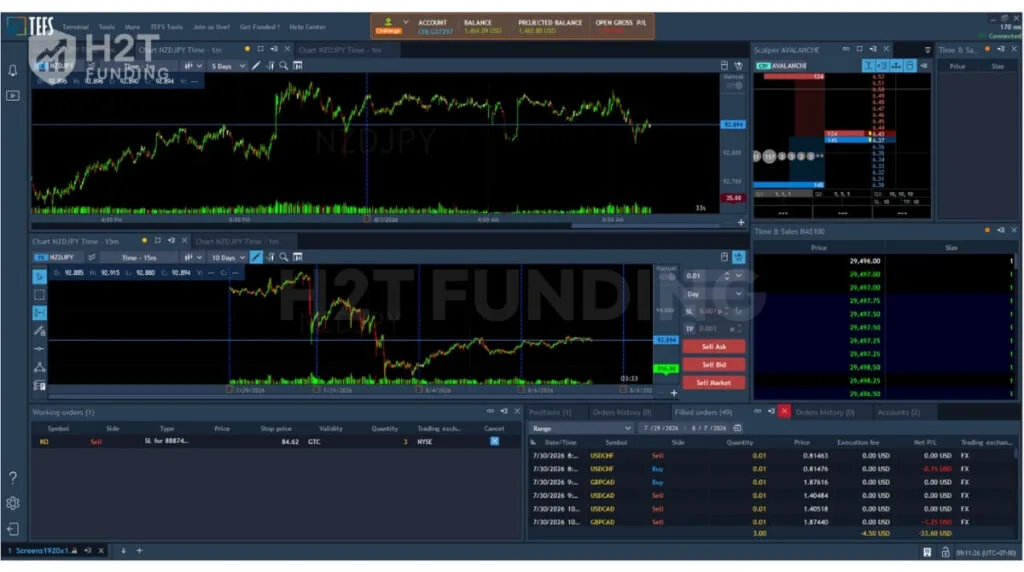
During our Challenge-account test, we found TEFS’s market coverage to be a clear strength. The platform gave us access to Forex, metals, indices, commodities, crypto, and more than 3,000 U.S. stock CFDs in one environment, making it easy to review and trade across several asset classes.
We also confirmed that the static drawdown worked as published. Because the maximum loss limit remained fixed rather than trailing equity, we found the risk framework easier to plan around.
The Challenge has no overall time limit and refunds the fee after a successful pass. TEFS also offers Instant Funding for traders who prefer to avoid an evaluation, although we did not test that program directly.
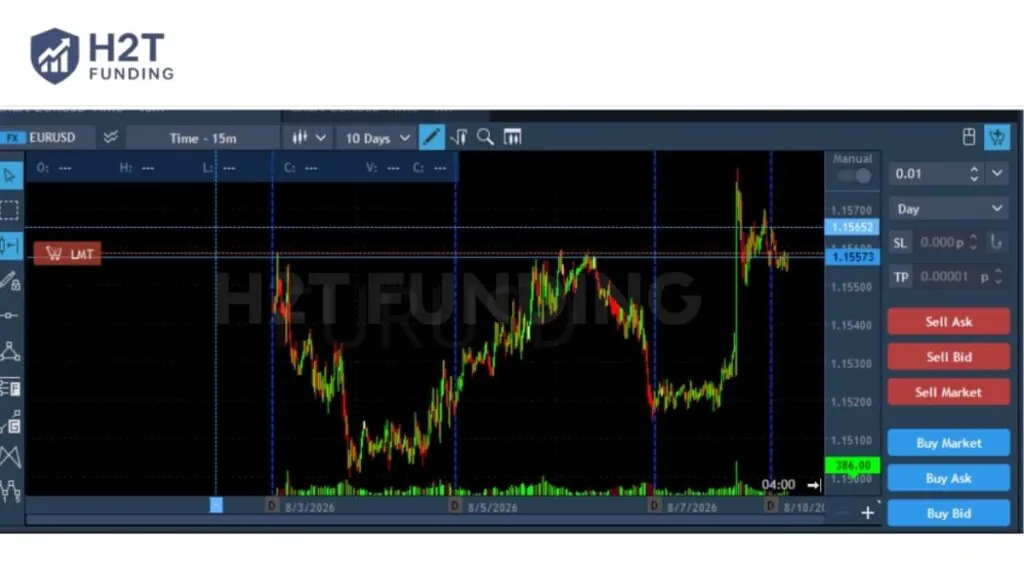
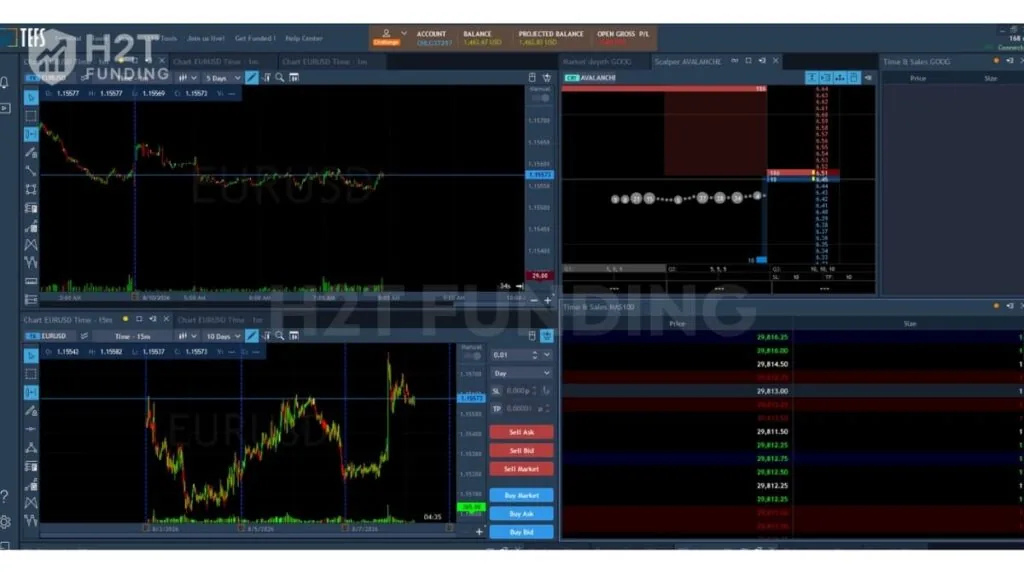
Our early-week PC check was positive. TEFS Trader connected normally, while charts, Market Depth, and Time & Sales data continued to update. We placed a EURUSD market order successfully, and the platform included the core tools we expected, such as order types, Stop Loss, Take Profit, trailing stops, partial closes, and customisable layouts.
We also found the Symbol Info section useful for checking margin, swaps, contract specifications, and trading hours.
1.2. What we didn’t like
However, execution quality was our biggest concern. We experienced slippage on some Forex market orders, including one fill at a higher price than the area displayed on the chart when we entered. This can affect entry quality, risk-to-reward calculations, and short-term trading strategies. We also found spreads on some instruments, including EURUSD and XAUUSD, to be higher than at several prop firms we have used.
TEFS also provides limited up-front detail on average spreads, commissions across all markets, execution speed, server location, uptime, and its slippage policy. Although the drawdown system was easy to understand, the limits are tight, and the dashboard shows used drawdown rather than the amount remaining. We also recorded one overnight case where floating profit and projected equity did not fully match, making equity monitoring less clear.
Platform choice is limited to TEFS Trader, with no MT4 or MT5 option. We recorded mild lag during more active periods, although it did not stop us from placing trades.
Live Chat replies were helpful but slower than we expected for urgent issues. U.S. residents are not accepted, and stock-trading fees should be considered before purchasing an account.
Pros & Cons Analysis
Pros
- Wide range of markets
- No time limit
- Challenge fee refunded after passing
- Instant Funding available
- Up to 85% profit share
- Proprietary all-in-one platform
Cons
- U.S. traders are not accepted
- Tight drawdown limits
- High Instant Funding fees
- Stock trading fees
- Slippage and spread concerns
- Limited platform choice
- Slow support response times
1.3. Our Ratings
The overall rating is based on our expert review
TEFS may be a good fit for disciplined international traders who prioritize market variety and predictable risk management. Traders who rely on ultra-tight spreads, fast execution, or extensive transparency may want to compare TEFS with other prop firms before making a purchase.
2. About TEFS
TEFS operates as a simulated trading provider, with entities in Dubai/UAE and Cyprus. The firm provides traders with access to simulated capital rather than traditional brokerage accounts and operates its own TEFS Trader platform.
TEFS’s public materials state that the company is not a registered broker/dealer and does not accept deposits as collateral. Its platforms and market data are provided through third-party liquidity providers.
The firm is also subject to geographic restrictions and does not accept traders from the United States and several other countries.
Because TEFS may change its programs, pricing, trading conditions, and eligibility requirements, traders should check the latest information on the official TEFS website before purchasing an account.
3. TEFS Programs, Pricing, Account Sizes & Refund Policy
TEFS offers two main programs: Challenge and Instant Funding. The Challenge requires traders to meet a profit target while staying within its drawdown rules, while Instant Funding provides immediate access to a simulated account without an evaluation.
3.1. TEFS Challenge
The TEFS Challenge is a single-stage evaluation with account sizes from $5,000 to $200,000. The six account tiers are currently priced from $55 to $969, giving traders access to larger simulated balances without changing the evaluation format.
According to TEFS’s current Challenge pricing page, the available account options are:
| Account Size | Price | Profit Target | Daily Drawdown | Max Drawdown |
|---|---|---|---|---|
| $5,000 | $55 | 10% | $200 | $300 |
| $10,000 | $99 | 10% | $400 | $600 |
| $25,000 | $199 | 10% | $1,000 | $1,500 |
| $50,000 | $319 | 10% | $2,000 | $3,000 |
| $100,000 | $499 | 10% | $4,000 | $6,000 |
| $200,000 | $969 | 10% | $8,000 | $12,000 |
All Challenge tiers have unlimited trading time, and TEFS states that the Challenge fee is refunded upon passing. Traders must also complete the minimum trading-day requirement before the evaluation can be completed.
The $5,000 account is the lowest-cost entry point at $55, while the $200,000 account provides the largest Challenge balance at $969. Traders looking for a middle ground can choose the $25,000 account at $199 or the $100,000 account at $499.
3.2. TEFS Instant Funding
TEFS’s Instant Funding program provides immediate access to a simulated account without requiring traders to complete an evaluation first. The program currently offers five account tiers from $12,500 to $210,000, with pricing ranging from $445 to $7,975.
| Account Size | Price | Profit Share | Static Drawdown | Time Limit |
|---|---|---|---|---|
| $12,500 | $445 | 65% | $625 | Unlimited |
| $20,000 | $765 | 65% | $1,000 | Unlimited |
| $66,000 | $2,485 | 70% | $3,300 | Unlimited |
| $130,000 | $4,945 | 75% | $6,500 | Unlimited |
| $210,000 | $7,975 | 85% | $10,500 | Unlimited |
The $66,000 Student account is currently marked as “Most Popular,” while the $210,000 PRO account offers the highest listed profit share at 85%.
Unlike the Challenge, Instant Funding does not require traders to reach a profit target before accessing the account. The trade-off is a substantially higher upfront fee, with the largest $210,000 tier priced at $7,975.
The specific profit target, trading-day requirement, and drawdown mechanics are covered in more detail in the TEFS trading rules section below
3.3. TEFS Refund Policy
TEFS’s refund terms differ between its two programs.
- Challenge: The Challenge fee is refunded upon passing the evaluation.
- Instant Funding: The upfront fee is not refunded upon reaching a profit milestone.
Traders should check TEFS’s current refund terms before purchasing, as conditions may change.
3.4. Which TEFS Account Offers the Best Value?
To keep the comparison clear, we use TEFS Challenge accounts and compare their fees, account sizes, profit targets, and maximum drawdowns. The same approach can also be applied to Instant Funding accounts using their respective fees and static drawdown limits.
| Category | $25K | $50K | $100K | $200K |
|---|---|---|---|---|
| Displayed Price | $169 | $255 | $399 | $725 |
| Account Size | $25,000 | $50,000 | $100,000 | $200,000 |
| Profit Target | $2,500 | $5,000 | $10,000 | $20,000 |
| Maximum Drawdown | $1,500 | $3,000 | $6,000 | $12,000 |
| Fee per $1K Capital | $6.76 | $5.10 | $3.99 | $3.63 |
From a capital-efficiency perspective, the $200K Challenge offers the best value, with the lowest cost per $1,000 of simulated capital. The $100K account is the next most efficient option. However, the larger accounts also require a higher upfront fee and a larger dollar profit target.
In our view, the $50K Challenge is the best middle-ground choice for traders who want a reasonable entry cost without moving directly into the higher financial commitment of the $100K or $200K accounts. At $255, it provides twice the simulated capital of the $25K account for less than twice the fee.
Our Verdict: Choose the $200K Challenge if your priority is maximum capital efficiency; choose the $50K Challenge if you want the best balance between cost, account size, and practical risk exposure.
4. TEFS Trading Rules & Account Constraints
TEFS applies different rules to its Challenge and Instant Funding programs, covering drawdown limits, trading activity, prohibited strategies, account violations, and payouts. Traders should review the rules for their specific account before trading, as some restrictions and trading parameters may vary by program.
4.1. Drawdown Rules
TEFS uses different drawdown models for its two programs:
| Program | Daily Drawdown | Maximum / Static Drawdown |
|---|---|---|
| Challenge | 4% | 6% maximum |
| Instant Funding | – | 5% static |
Challenge accounts have a 4% daily drawdown and 6% maximum drawdown, while Instant Funding accounts use a 5% Static Drawdown. For example, a $100,000 Challenge account has a $4,000 daily loss limit and a $6,000 maximum loss limit.
The main difference is that Challenge accounts must stay within both daily and maximum drawdown limits, while Instant Funding uses a single static drawdown threshold.
4.1.1. Our TEFS Challenge Drawdown Testing
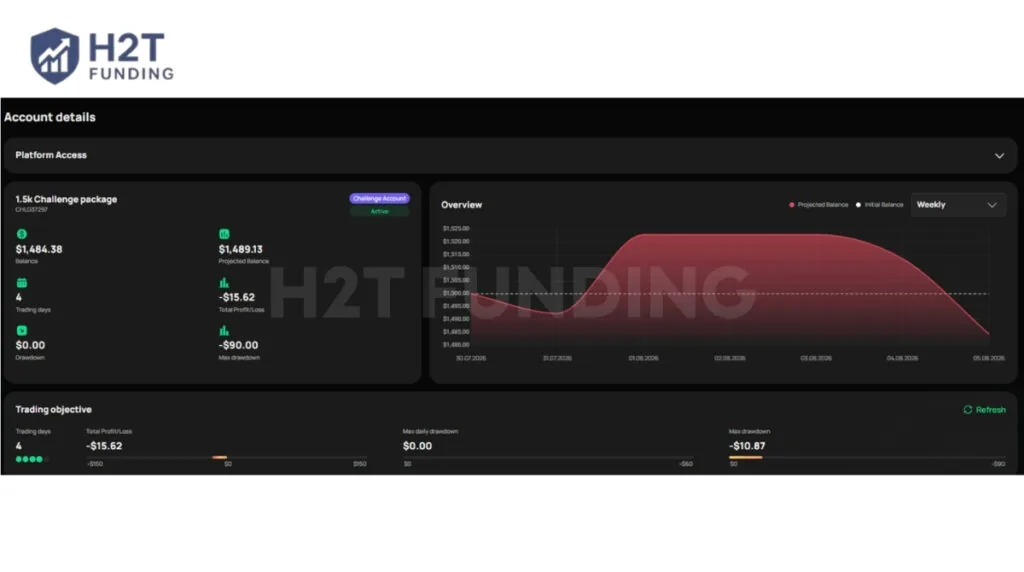
In our testing, the TEFS dashboard showed $10.87 in drawdown against a $90 maximum. This suggests that the Static Drawdown limit is fixed to the account’s initial balance rather than increasing with profits. This is a potential advantage because it makes risk management easier for traders compared to the Trailing Drawdown mechanism
4.2. Trading Days & Time Limits
TEFS currently applies a minimum trading-day requirement only to its Challenge program.
| Requirement | Challenge | Instant Funding |
|---|---|---|
| Profit Target | 10% | None |
| Minimum Trading Days | 4 | None |
| Overall Time Limit | Unlimited | Unlimited |
Challenge traders must complete at least four trading days, but there is no overall time limit for completing the evaluation. In other words, the four-day requirement does not mean traders have only four days to pass.
Instant Funding does not require a minimum number of trading days or an evaluation period.
4.3. Trading Restrictions
TEFS prohibits trading practices that attempt to exploit pricing errors, latency, platform weaknesses, or coordinated activity across accounts. According to its trading agreement, prohibited activities include:
- Lag trading and latency exploitation
- Trading at off-market prices or exploiting pricing errors
- Arbitrage and platform manipulation
- Price manipulation or misuse of insider information
- Cross-account hedging or coordinated trading
- Copy trading, mirror trading, or substantially replicating trades across accounts
- Unauthorized account access or allowing another person to trade
- Certain Expert Advisors and tools that interfere with platform networking or use ultra-high-speed or mass order entry
- Placing Buy Stop or Sell Stop orders before financial data releases to exploit price movements
TEFS also restricts certain forms of HFT and scalping without prior written approval. Trades lasting less than two minutes are classified as HFT under its rules, making this an important consideration for short-term traders.
For overnight trading, TEFS allows U.S. stock positions up to 20% of the sub-account balance, but does not recommend holding them overnight due to market-gap risk. Exceeding the limit may lead to position adjustments or, if repeated, account closure. Weekend trading is allowed but not recommended.
TEFS also reserves the right to adjust trading parameters, including order size, available instruments, margin requirements, commissions, fees, and maximum allowed loss, particularly during extreme market conditions.
4.4. What Happens If You Break a TEFS Rule?
Violating TEFS’s trading rules can have consequences beyond simply breaching a drawdown limit. Depending on the nature and severity of the violation, TEFS may:
- Cancel affected trades
- Forfeit performance fees
- Cancel the account
- Restrict or ban the trader
- Refuse a refund where applicable
Reaching the 10% Challenge profit target does not override the account’s drawdown limits or other trading restrictions. Likewise, Instant Funding traders must continue to comply with the 5% Static Drawdown and applicable trading rules even though the program has no profit target.
TEFS also reserves the right to review a trader’s strategy and determine whether specific trading activity constitutes abusive or prohibited behavior.
5. TEFS Eligibility: Restricted Countries & Eligible Traders
TEFS is available to traders in many countries, but U.S. residents and traders from certain restricted jurisdictions cannot use its services. TEFS’s website lists 19 restricted jurisdictions, including the United States.
The U.S. restriction is particularly important for traders considering TEFS because of the regulatory history surrounding Tradenet, a trading business previously associated with TEFS platform services. In 2020, the SEC found that Tradenet had offered security-based swaps to U.S. retail investors without the required registration and exchange arrangements, resulting in a $130,000 civil penalty and cease-and-desist order.
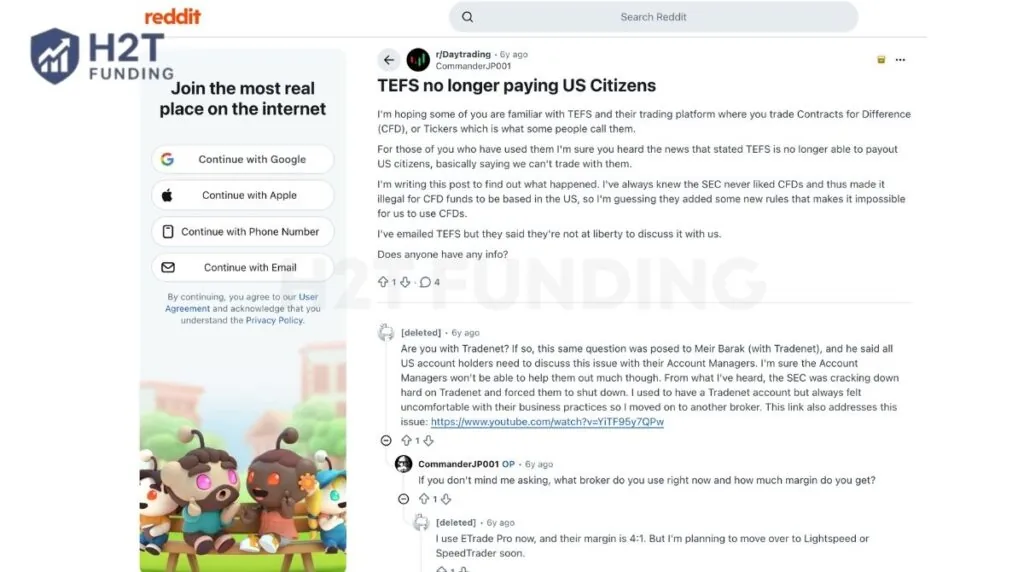
U.S. traders are no longer using TEFS services (Updated on August 19, 2026)
However, this should be treated as regulatory context rather than a stated reason for TEFS’s current policy. TEFS itself does not explain the U.S. restriction on its AML page; it simply states that clients from the listed jurisdictions are not accepted.
TEFS currently restricts clients from:
- United States
- Israel
- Somalia
- Eritrea
- Yemen
- Sudan
- South Sudan
- Mali
- Myanmar
- Iraq
- Iran
- Republic of the Congo
- Guinea-Bissau
- Central African Republic
- Libya
- Liberia
- Sierra Leone
- North Korea
- Russian Federation
For eligible traders, TEFS offers U.S. stock CFDs, futures, and forex. The U.S. restriction applies to trader eligibility, not market access: non-U.S. traders may trade U.S. stock CFDs, while U.S. residents cannot open a TEFS account.
Note: TEFS is best suited to international traders outside its restricted jurisdictions. Verify your eligibility before purchasing, as TEFS may require proof of identity and residence.
6. TEFS Account Scaling & Growth Options
TEFS does not automatically scale accounts, but it offers a flexible Upgrade System for Instant Funding traders who want access to more capital. According to TEFS, traders can use their simulated profits to move into a larger funded account tier, such as upgrading from a $20,000 to a $66,000 account, with the potential for a higher profit split.
This means TEFS’s growth model is based on voluntary account upgrades rather than automatic scaling after reaching specific profit milestones. Traders should therefore view the upgrade system separately from traditional prop-firm scaling plans.
Key points:
- Automatic scaling: No
- Upgrade system: Yes
- Upgrade method: Use simulated profits to move to a larger account tier
- Example: $20,000 → $66,000
- Higher profit split: Available on larger Instant Funding tiers
For traders considering TEFS, this structure provides a way to increase account size without relying on an automatic scaling schedule. However, traders should check the latest upgrade conditions before making a purchase, as TEFS may change its account structure and requirements.
7. TEFS Payout Rules & Profit Split
7.1. TEFS Profit Split & Payout Limits
TEFS offers profit splits of 65%–85% on its Instant Funding accounts, depending on the account tier. The highest listed split is 85% on the $210,000 PRO account.
- Profit Split: 65%–85%, depending on the account tier
- Minimum Profit: $400 for most packages and $200 for Intro packages
- Monthly Payout Cap: Up to $15,000
- Payout Request: Submit by the 10th of the following month
- Payment Date: Eligible payouts are processed by the 15th
Traders must meet the applicable profit threshold and remain compliant with TEFS’s trading rules and drawdown limits to qualify for a payout.
7.2. TEFS Payout & Compliance Requirements
Before processing a payout, TEFS may require identity and AML verification, including a valid ID, proof of residence, and proof of a bank account in the trader’s name.
Payments must comply with TEFS’s AML procedures. Third-party payments, cash, money orders, exchange-house transfers, and Western Union transfers are not accepted, and withdrawals are generally returned to the original payment source.
TEFS may suspend or freeze accounts, funds, or unpaid performance fees in cases involving fraud, unauthorized access, regulatory violations, or suspicious activity. Traders should complete all required verification and check the latest payout and AML requirements before requesting a payout.
8. TEFS Trading Platform & Tradable Assets
TEFS uses its proprietary TEFS Trader platform rather than MetaTrader 4 or MetaTrader 5.
The platform is designed around multi-asset trading and provides access to instruments including U.S. stocks and other financial markets. TEFS currently highlights U.S. equities, Forex, Futures and other instruments.
8.1. What Can You Trade With TEFS?
Depending on the account and available instruments, TEFS provides access to:
- U.S. stocks
- Stock CFDs
- Forex
- Futures
- Indices
- Commodities
- And other instruments.
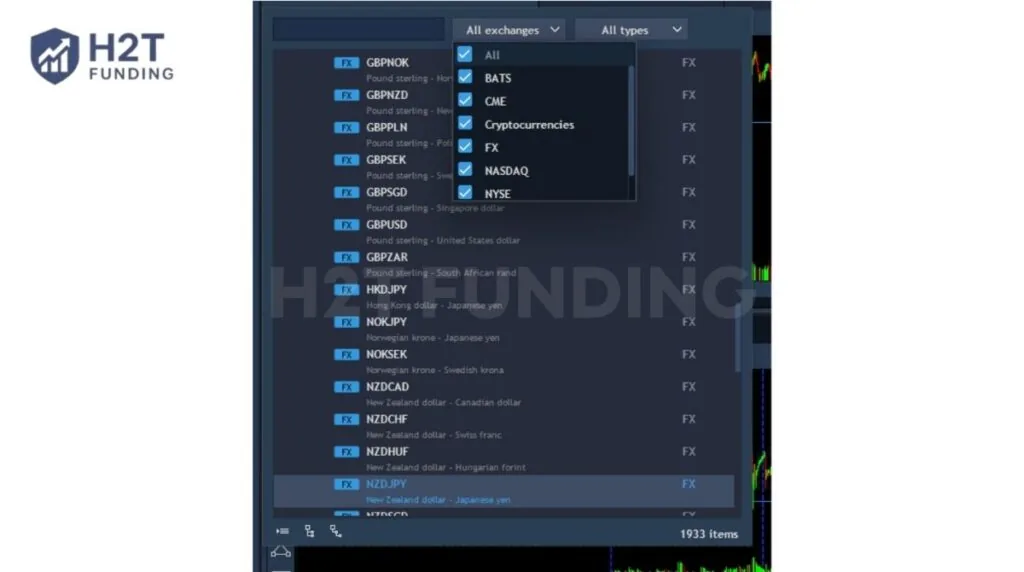
The access to 3,000+ U.S. stocks is one of TEFS’s key features, making the platform a strong option for traders focused on U.S. equities. Available instruments may vary by account, so check the current list before trading.
8.2. TEFS Execution and Trading Costs
Our testing identified:
- Some market-order slippage
- Relatively high spreads on certain instruments
- Occasional mild platform lag during active periods
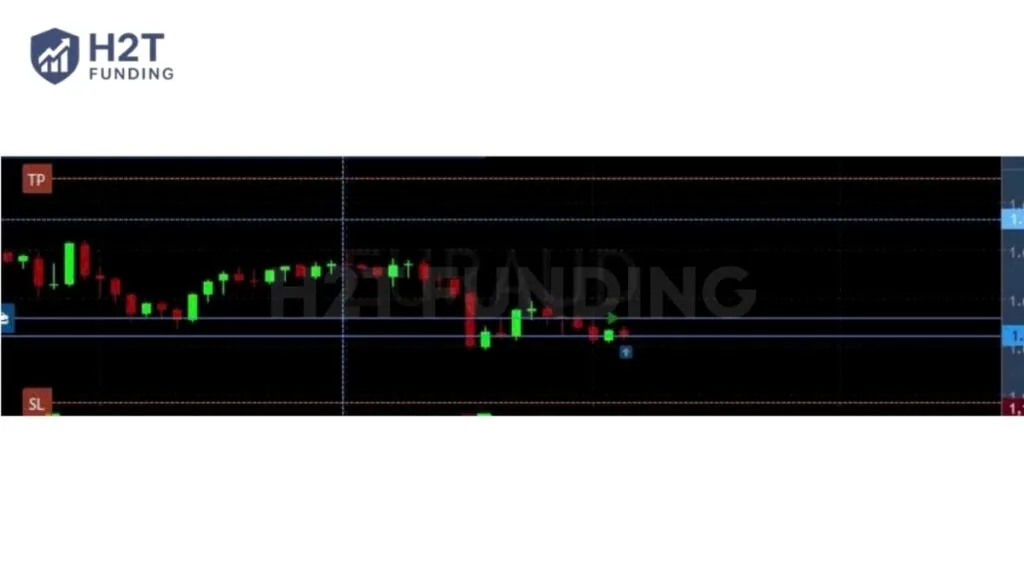
These conditions are more important for Scalpers and short-term traders, where small differences in entry price, spread, and execution can have a direct impact on the trade’s risk-reward ratio. Swing and Position traders may be less affected by short-term execution differences.
9. TEFS Customer Support & Educational Resources
TEFS provides customer support through email, phone, and WhatsApp, with its contact page stating that the team can assist with questions about the trading academy, trading challenges, trading chat room, and other matters.
- Customer Support: Support is available via email, phone, and WhatsApp for account, challenge, and other inquiries.
- Educational Resources: TEFS offers courses covering day trading, forex, risk management, and trading strategies, with some courses available 24/7.
- Live Trading Room: Traders can follow live trades with lead analysts, receive strategy tips, live commentary, and ask questions in real time.
- Personal Coaching: TEFS also offers one-on-one coaching with live trading reviews, trade setups, and discipline training.
10. Is TEFS Legit? Operational Transparency & Real User Reviews
TEFS operates through entities in the UAE and Cyprus and offers simulated trading accounts rather than traditional brokerage accounts. TEFS states that it is not a registered broker/dealer.
10.1. TEFS Legal & Operational Structure
TEFS accounts use live market data in a simulated environment. Traders do not trade real capital, although TEFS may hedge selected trades for its own risk management.
TEFS also publishes its service agreement and company information, allowing traders to review the firm’s account terms before purchasing.
10.2. TEFS Trustpilot Reviews
TEFS’s Trustpilot profile currently carries a Warning because of a breach of Trustpilot’s guidelines. Trustpilot also states that it has removed a number of fake reviews from the profile.
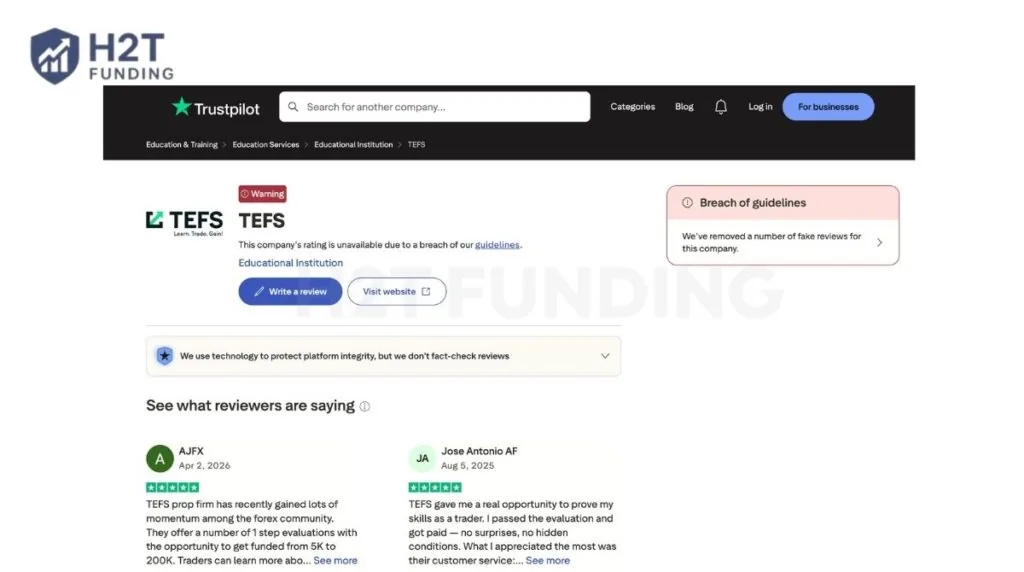
This is important because Trustpilot prohibits fake, incentivized, or manipulated reviews and may remove reviews or place a warning when it detects violations. However, Trustpilot does not state that TEFS paid for fake reviews or forced customers to leave 5-star ratings, so we would not make that claim without further evidence.
The warning is a reputation red flag, but it does not prove that TEFS is a scam or that all reviews are unreliable. We recommend looking beyond Trustpilot and checking payout experiences, account-closure complaints, rule enforcement, and independent reviews before purchasing an account.
11. TEFS Competitor Comparison
To make the comparison more practical, we use the $50K TEFS Challenge as the reference account and compare it with $50K programs from FTMO x OANDA, MyFundedFutures, and Apex Trader Funding. Because these firms use different evaluation models and fee structures, the table focuses on the key factors traders typically consider before purchasing an account.
| Feature | TEFS50K Challenge | FTMO 1-Step 50K | MyFundedFutures Rapid EOD $50K | Apex Trader Funding50K EOD |
|---|---|---|---|---|
| Fee Structure | One-time fee | One-time fee | Monthly subscription | One-time fee / 30-day access |
| Activation Fee | $0 | $0 | $0 | $0 |
| Profit Target | $5,000 (10%) | $5,000 (10%) | $3,000 (6%) | $3,000 (6%) |
| Drawdown | $3,000 (6%) static | $5,000 (10%) EOD trailing | $2,000 EOD trailing | $2,000 EOD |
| Daily Loss Limit | $2,000 (4%) | $1,500 (3%) | None | $1,000 (2.0%) |
| Minimum Trading Days | 4 days | None | 4 days | 0 days |
| Consistency | None stated | 50% Best Day | Evaluation: 30%Funded: None | Evaluation: NonePA: 50% |
| Profit Split | 80% | 90% | 90/10 | 100% approved payout |
| Payout | 1st: after 30 daysThen monthly | After 14 days | Daily payouts$2,100 first-payout buffer | Safety Net + qualifying daysWeekly payouts |
| Platforms | TEFS Trader | MT5 / TradingView | 3 options | 4 options |
11.1. How Does TEFS Compare at $50K?
At $50K, the TEFS Challenge has a 10% profit target, 4% daily drawdown, 6% static maximum drawdown, four minimum trading days, and an 80% profit split.
Its main difference is market access. TEFS offers 3,000+ U.S. Stock CFDs, as well as Forex, Metals, Indices, and Commodities. MyFundedFutures and Apex are more focused on futures trading.
The main trade-offs are the proprietary TEFS Trader platform and payout schedule. The first TEFS payout is available after 30 days, followed by monthly payouts, while some alternatives offer more frequent payouts.
The 6% static drawdown is also different from the EOD trailing models used by some competitors. The maximum drawdown remains fixed rather than increasing with account profits.
11.2. Is the TEFS $50K Challenge Better Than the Alternatives?
There is no single choice that fits every trader. The main differences are:
- TEFS: Offers U.S. Stock CFDs, multi-asset access, and a static drawdown model.
- FTMO: Offers MT5 and TradingView, a 90% profit split, and a shorter initial payout period.
- MyFundedFutures: Focuses on futures trading and offers frequent payouts through its Rapid EOD program.
- Apex Trader Funding: Also focuses on futures, with multiple platform options and its own payout structure.
Overall, the TEFS $50K Challenge may appeal to traders who value U.S. stock access and static drawdown. Traders who prioritize futures, platform choice, or faster payouts may prefer one of the alternatives.
If you’re comparing different providers, our prop firm reviews provide detailed insights into trading rules, fees, platforms, payout conditions, and other key factors. Eligibility, pricing, and account terms can change, so always verify the latest conditions before purchasing.
12. Who is TEFS best for?
TEFS is best suited to eligible international traders who want broad market access, particularly U.S. Stock CFDs, and prefer a predictable risk structure. Its proprietary TEFS Trader platform and multi-asset offering may appeal to traders who do not need traditional platforms such as MT4 or MT5.
12.1. TEFS May Be a Good Fit If You:
- Want access to 3,000+ U.S. Stock CFDs alongside Forex, Metals, Indices, and Commodities
- Prefer a static maximum drawdown rather than a trailing model
- Want no overall time limit on the Challenge
- Prefer a multi-asset trading environment
- Are comfortable using the TEFS Trader platform
- Can manage risk within the firm’s daily and maximum drawdown limits
- Value access to trading courses, live trading rooms, coaching, and customer support
12.2. TEFS May Not Be a Good Fit If You:
- Are a U.S. resident or live in another restricted jurisdiction
- Prefer MT4, MT5, cTrader, or other third-party platforms
- Prioritize tight spreads and fast execution
- Prefer frequent or faster payouts
- Want extensive public information about trading conditions and execution
- Use strategies that conflict with TEFS’s trading restrictions
Overall, TEFS is best suited to disciplined international traders who value market variety and predictable risk limits. Traders who prioritize platform flexibility, faster payouts, or greater trading-condition transparency may find other prop firms more suitable.
13. TEFS FAQs
-
Yes. TEFS operates as a simulated trading provider with entities in the UAE and Cyprus. It is not a traditional regulated broker, so traders should review its rules, terms, and trading conditions before purchasing an account.
-
No. U.S. residents are currently restricted from using TEFS. If you’re looking for alternatives, see our guide to the best prop firms for U.S. traders.
-
TEFS uses its proprietary TEFS Trader platform instead of MT4 or MT5. Platform choice can vary significantly between firms, so traders comparing options may also want to review our prop firm reviews.
-
TEFS advertises access to 3,000+ U.S. Stock CFDs, alongside Forex, Futures, Metals, and Indice.
-
The TEFS Challenge has a 10% profit target, with a 4% daily drawdown and 6% maximum drawdown.
-
No. The Challenge has no overall time limit, although traders must meet the minimum trading-day requirement. You can also compare TEFS with other prop firms with no time limit.
-
TEFS allows short-term trading, but scalpers should weigh its trading costs and execution conditions before choosing the firm. For traders prioritizing scalping, check our list of best prop firms for scalpers to compare options built for fast, high-frequency execution.
-
The highest listed profit share is 85% on the largest Instant Funding tier. If you want to compare firms offering higher profit splits, see our guide to prop firms with the highest profit split.
-
Yes. TEFS advertises 3,000+ U.S. Stock CFDs, making U.S. equities one of its main offerings.
-
It depends on your trading approach:
- Challenge: Better suited to traders who want a lower upfront cost and are comfortable completing an evaluation.
- Instant Funding: Better suited to traders who want to skip the evaluation and access an account immediately.
-
Before purchasing, check:
- Eligibility: Confirm that your country is supported.
- Fees: Compare the upfront cost with the account size and trading conditions.
- Drawdown: Understand both daily and maximum drawdown rules.
- Trading restrictions: Check rules on scalping, news trading, overnight positions, copy trading, and other strategies.
- Payouts: Review the payout schedule, profit split, minimum requirements, and any caps.
- Platform: Make sure the available platform fits your trading style.
- Refund terms: Check whether and when the initial fee is refundable.
For a broader comparison before choosing a provider, see our prop firm reviews, which cover rules, fees, platforms, payouts, and other key factors.
14. Conclusion: Is TEFS Legit?
Yes, TEFS is a legitimate prop firm, but whether it is the right fit depends on your trading style. Our TEFS Challenge testing shows that the firm has several strengths, including a clear evaluation structure, Static Drawdown, no overall time limit, and access to 3,000+ U.S. Stock CFDs.
However, legitimacy does not mean it is free of drawbacks. The main areas that need attention are spread, slippage, platform performance, and limited public information on execution conditions. These factors may matter more to Scalpers and high-frequency traders. If these limitations are a concern, see our best prop firms guide for alternative options.
In our opinion, TEFS is worth considering for eligible international traders who want U.S. equity exposure and a multi-asset trading environment, especially Swing and Position traders. U.S. residents and traders looking for a traditional live-funded brokerage account should consider other options.
This review is based on our TEFS Challenge testing experience and the firm’s published information. Trading conditions, pricing, and rules can change, so check the latest terms before purchasing.