


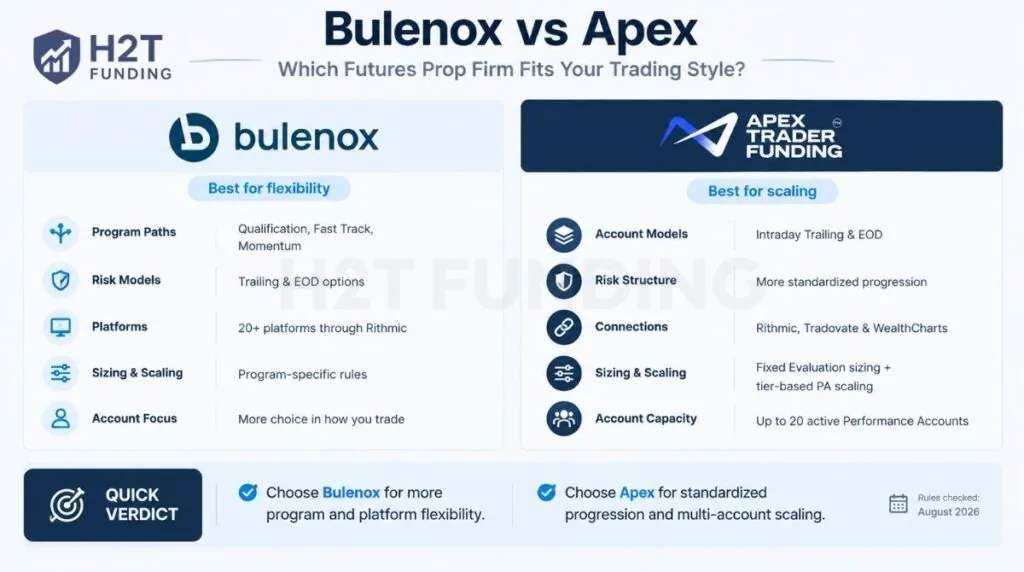
Apex is better for traders who prioritize multi-account scaling, while Bulenox is better for traders who want more flexibility in program paths, drawdown structures, and platform choice. Bulenox offers Qualification, Fast Track, and Momentum paths, while Apex uses standardized Intraday Trailing and EOD models, supports up to 20 active Performance Accounts, and applies tier-based PA scaling.
This Bulenox vs Apex comparison examines pricing, payout rules, consistency requirements, platforms, position sizing, scaling, and trader feedback to help you choose the better fit for your trading style.
Key takeaways
- Overall difference: Bulenox offers more flexibility across program paths, risk models, and platforms, while Apex Trader Funding offers a more standardized structure with greater multi-account scaling.
- Program structure: Bulenox lets traders choose between Qualification, Fast Track, and Momentum, while Apex centers its current offering on Intraday Trailing and EOD account structures.
- Drawdown and risk rules: Bulenox applies different Trailing or EOD drawdown rules depending on the selected program and option, while Apex separates its accounts more clearly by Intraday Trailing and EOD models.
- Position sizing and scaling: Bulenox uses program-specific sizing and scaling rules, while Apex keeps Evaluation sizing fixed and uses tier-based scaling in Performance Accounts.
- Platforms: Bulenox offers wider third-party platform compatibility through Rithmic, while Apex gives traders more choice in the underlying account connection through Rithmic, Tradovate, or WealthCharts.
- Best fit: Bulenox is better for traders who prioritize flexibility and platform choice, while Apex is better for traders who prioritize standardized progression and larger multi-account capacity.
Rules checked: August 2026
1. Bulenox vs Apex at a glance
Bulenox offers more program paths and risk-model flexibility, while Apex Trader Funding uses a simpler Intraday-versus-EOD structure with higher account capacity and standardized PA payout rules.
Both focus on futures trading, but they differ most in program structure, drawdown models, payout requirements, and the number of funded-stage accounts traders can manage.
| Feature | Bulenox | Apex Trader Funding |
|---|---|---|
| Program Structure | Qualification, Fast Track, Momentum | Intraday Trailing Evaluation, EOD Evaluation |
| Account Sizes | $25K, $50K, $100K, $150K | $25K, $50K, $100K, $150K |
| Fee Structure | One-time account fees; activation depends on the selected path | One-time evaluation fee; PA activation depends on the selected plan |
| Drawdown Models | Trailing Drawdown or EOD Drawdown | Intraday Trailing Drawdown or EOD Drawdown |
| Evaluation Trading Days | Qualification: none;Momentum: none;Fast Track skips evaluation | No minimum trading days; both evaluations can be passed in one day |
| Payout Access | Path-dependent: Fast Track, Momentum Master, and regular Master use different eligibility rules | After 5 qualifying trading days |
| Payout Split | First $10,000 paid to the trader at 100%; then 90/10 | 100% of approved PA payouts |
| Consistency Rule | Fast Track: 20% → 25% → 30%;Momentum Master: 35%;Regular Master: 40% | 50% on current Performance Accounts |
| Maximum Funded-Stage Accounts | Up to 5 Master-level accounts combined | Up to 20 PAs combined |
| Overnight Holding | Not allowed | Not allowed |
| Platforms | Rithmic plus NinjaTrader and multiple supported third-party platforms | Rithmic, Tradovate, WealthCharts |
| Markets | CME futures across indices, currencies, energy, metals, agriculture, and crypto futures | Futures markets across major CME Group product categories |
Bulenox terminology:
- Option 1 = Trailing Drawdown: the drawdown moves in real time with new account highs.
- Option 2 = End-of-Day (EOD) Drawdown: the drawdown updates from the closing balance. Scaling and Daily Loss Limit rules vary by Bulenox program.
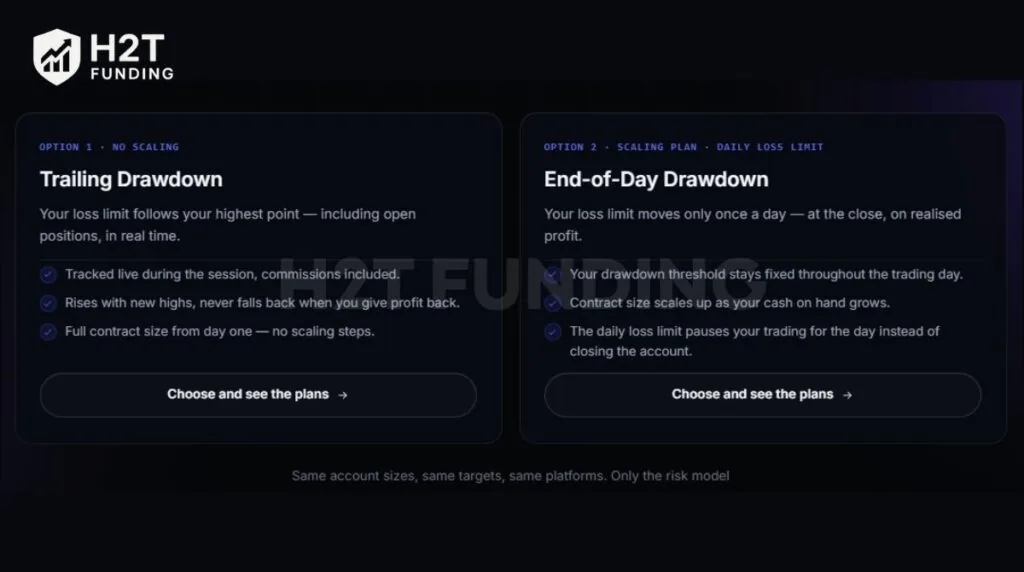
At a glance, Bulenox is the more flexible choice for traders who want multiple routes and different risk structures, while Apex is easier to map for traders who prefer a standardized Intraday/EOD evaluation framework and the ability to manage more Performance Accounts.
2. Bulenox vs Apex pricing and account fees
Bulenox has the lower upfront cost in the 50K options compared here, while Apex offers more ways to structure the total fee through its drawdown and activation-fee choices. Bulenox charges $143 for 50K Momentum, $175 for Qualification, and $488 for Fast Track, while Apex’s 50K Standard Evaluations start at $249 for Intraday and $550 for EOD before PA activation fees.
| Pricing Factor | Bulenox | Apex Trader Funding |
|---|---|---|
| Billing model | One-time payment on current plans | One-time payment on current Evaluations |
| Access period | Qualification and Momentum access is valid for 30 days | 30 consecutive calendar days |
| Recurring evaluation fee | None | None on current products |
| Main pricing options | Qualification, Fast Track, Momentum | Intraday or EOD; Standard or No Activation Fee |
| Activation after passing | Regular Master Account has a one-time activation fee; Momentum Master is activated free | Standard Evaluation has a one-time PA activation fee; No Activation Fee Evaluation sets it to $0 |
| Reset structure | Current Qualification plans do not use a recurring reset model | Current Evaluations have no resets; traders must purchase a new Evaluation after failure |
| Refunds | Payments are non-refundable once the service has been used | Purchases and optional fees are non-refundable |
50K pricing example:
At the 50K level, Bulenox changes the upfront price according to the path you choose, while Apex changes the total cost according to its drawdown and activation-fee options.
| 50K Option | Base Cost Structure |
|---|---|
| Bulenox Qualification | $175 one-time |
| Bulenox Momentum | $143 one-time; Momentum Master activation included |
| Bulenox Fast Track | $488 one-time; no qualification stage |
| Apex Intraday Standard | $249 base Evaluation price + $59 PA activation fee after passing |
| Apex EOD Standard | $550 base Evaluation price + $139 PA activation fee after passing |
| Apex Intraday No Activation Fee | Higher one-time Evaluation price; PA activation fee is $0 |
| Apex EOD No Activation Fee | Higher one-time Evaluation price; PA activation fee is $0 |
The key pricing difference is when and what you pay for. Apex Standard Evaluations separate the Evaluation fee from the later PA activation fee, while its No Activation Fee products move that cost into the initial purchase. Bulenox instead prices three different routes: Qualification, Fast Track, and Momentum.
Legacy Apex note: Based on our experience using Apex and monitoring its official social channels, we have seen reset promotions for older Legacy Evaluations, including the recent $49 Legacy Reset offer. These promotions do not apply to current Apex Evaluations, which have no reset option.

3. Payouts, profit split, and withdrawal rules
Apex offers the simpler payout structure on its current Performance Accounts: a 100% payout split, eligibility after 5 qualifying trading days, and a $500 minimum request.
Bulenox pays 100% of the first $10,000 withdrawn per trader, then 90%, but its payout timing and requirements vary between Master, Fast Track, and Momentum accounts. Apex limits each PA to 6 approved payouts, while Bulenox’s regular Master Account removes its maximum payout cap after the third payout.
| Payout Factor | Bulenox | Apex Trader Funding |
|---|---|---|
| Profit split | 100% of the first $10,000 in payouts per trader, then 90/10 | 100% of approved PA payouts |
| Earliest payout eligibility | Regular Master: after 10 trading days; Momentum Master: 5 qualifying profitable days; Fast Track: no minimum trading days, but payout goals apply | After 5 qualifying trading days |
| Payout frequency | Regular Master: weekly on Wednesday; Fast Track and Momentum: requests can be processed on business days when eligible | Up to weekly after each set of 5 qualifying trading days |
| Minimum payout | Regular Master/Fast Track: $1,000; Momentum: $500 on 25K and $1,000 on larger accounts | $500 across all PA sizes |
| Consistency requirement | Regular Master: 40%; Momentum: 35%; Fast Track: 20% first payout, 25% second, 30% from third onward | 50% |
| Payout limits | Regular Master: account-size caps for payouts 1–3, then no maximum payout cap; Fast Track and Momentum use their own payout caps | Maximum 6 approved payouts per PA, with per-request caps based on account size and payout number |
| Balance buffer | Regular Master requires a Safety Threshold Reserve; Fast Track and Momentum also require account-specific payout balance thresholds | Safety Net = drawdown amount + $100 |
| Payout methods | ACH/wire transfer or PayPal | U.S.: ACH direct deposit; international: Plane |
Profit split:
- Apex pays 100% of every approved payout from its current simulated Performance Accounts. This is an important change from Apex Legacy accounts, which used the older “100% of the first $25,000, then 90/10” structure. Current Intraday and EOD PAs instead use a 100% payout split and a maximum of 6 approved payouts per account.
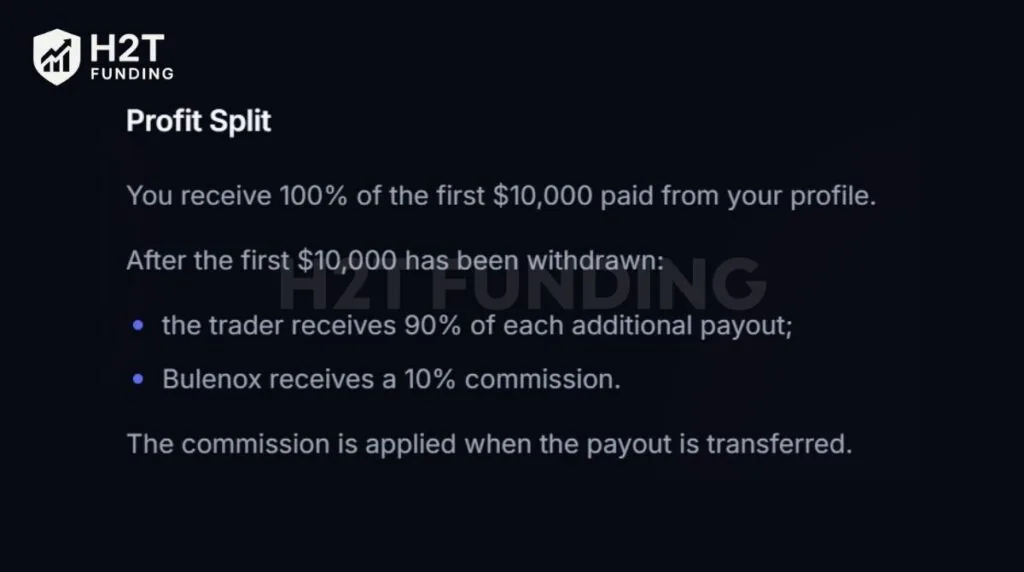
- Bulenox pays traders 100% of the first $10,000 withdrawn across their applicable accounts, then 90% thereafter. The $10,000 threshold is counted per trader rather than resetting independently for every account.
“You receive 100% of the first $10,000 paid from your profile.” – Master Account, Bulenox
Payout speed and withdrawal requirements:
- Apex provides the faster standard path to repeated payouts, with eligibility after 5 qualifying trading days. Each qualifying day must also reach a minimum net profit based on the account size and drawdown type. For example, a 50K PA requires at least $200 per qualifying day on Intraday and $250 on EOD. The minimum payout is $500. Apex also requires the account to remain above its Safety Net and meet the 50% consistency requirement.
- Bulenox payout timing depends on the account path. A regular Master Account requires 10 trading days for each payout period and processes payouts weekly on Wednesday. Fast Track removes the minimum-trading-day requirement and ordinarily processes eligible requests submitted before 12:01 PM CT on business days the same day, while Momentum Master requires 5 qualifying profitable days per payout cycle.
One meaningful long-term difference is the payout ceiling: Apex closes a Performance Account after its sixth approved payout, whereas a regular Bulenox Master Account has no maximum payout cap after payout #3. Apex’s current six-payout PA structure is part of its newer program rather than the older Legacy payout model.
Note: The consistency percentages above are included here only because they directly affect payout eligibility. The calculation methods and differences between Bulenox’s rules and Apex’s 50% rule are covered separately in the consistency section below.
Read more:
4. Bulenox vs Apex: Key trading rules
Bulenox has more rule variation across Qualification, Fast Track, Momentum, and their post-entry stages, while Apex uses a more standardized Intraday-versus-EOD structure. Both firms allow their current evaluations to be completed in one trading day, but drawdown, daily loss, scaling, consistency, and payout-stage rules differ.
| Trading Rule | Bulenox | Apex Trader Funding |
|---|---|---|
| Entry paths | Qualification, Fast Track, Momentum | Intraday Trailing Evaluation, EOD Evaluation |
| Minimum days to pass | Qualification: none;Momentum: none;Fast Track skips evaluation | Intraday: none; EOD: none |
| Drawdown model | Qualification: Option 1 Trailing / Option 2 EOD; Fast Track: Option 1 Trailing / Option 2 EOD; Momentum: Option 1 Trailing / Option 2 EOD | Intraday: real-time Intraday Trailing Drawdown; EOD: End-of-Day Drawdown |
| Daily Loss Limit | Qualification: Option 1 none / Option 2 yes; Fast Track: Option 1 none / Option 2 yes except $25K; Momentum: Option 1 none / Option 2 yes | Intraday Evaluation: none; EOD Evaluation: yes; both PA types use tier-based DLLs |
| Position sizing / scaling | Qualification: Option 1 fixed contract limit / Option 2 Dynamic Scaling; Fast Track: fixed limits with no scaling; Momentum qualification: fixed contract limits | Evaluations: fixed position size; Intraday and EOD PAs: tier-based scaling |
| Consistency at entry stage | Qualification: none; Momentum qualification: none; Fast Track has no evaluation stage | No consistency rule on either current Evaluation |
| Consistency at payout stage | Regular Master: 40%; Fast Track: 20% first payout, 25% second, 30% from third; Momentum Master: 35% | Intraday and EOD PAs: 50% |
| Overnight holding | Not allowed; positions must close by 3:59 PM CT | Not allowed; positions must close before 4:59 PM ET |
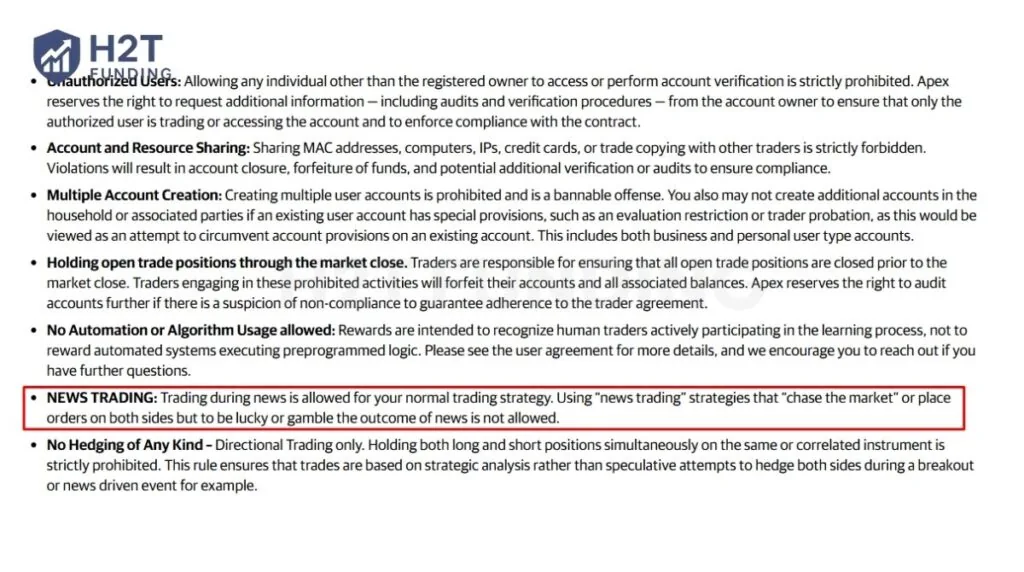
| News trading | Qualification, Fast Track, and Momentum allow news trading within applicable risk limits | Normal directional news trading is allowed; hedging and multi-directional news strategies are prohibited |
| Drawdown breach | Breaching the applicable Trailing or EOD Drawdown suspends or closes the account depending on stage | Touching the applicable drawdown threshold fails an Evaluation or permanently closes a PA |
| Hitting only the DLL | On applicable EOD programs, trading pauses for the rest of the session rather than failing the account | Trading pauses for the session; the account remains active |
Key trading rules compared:
- Minimum trading days: Bulenox Qualification and Momentum can be passed in one day; Fast Track skips evaluation. Apex Intraday and EOD Evaluations can also be passed in one day.
- Drawdown: Bulenox offers Trailing or EOD models across its programs. Apex also offers Intraday Trailing and EOD Drawdown.
- Daily loss limit: Bulenox DLL rules vary by program and option. Apex has no DLL on Intraday Evaluations, but EOD Evaluations and both PA types use a DLL.
- Scaling: Bulenox uses fixed sizing, dynamic scaling, or no scaling depending on the program and option. Apex uses fixed sizing in Evaluations and tier-based scaling in PAs.
- Consistency: Bulenox has no consistency rule during Qualification or Momentum qualification; payout-stage rules range from 20% to 40% by account type. Apex applies 50% consistency to Intraday and EOD PAs.
- Holding positions: Bulenox requires positions closed by 3:59 PM CT; Apex requires them closed before 4:59 PM ET.
- Rule breaches: A drawdown breach can fail or close the account at both firms, while hitting only a DLL generally pauses trading for the session.
- News trading: Both allow directional news trading within their rules, while Apex specifically prohibits hedging and multi-directional news strategies.
“Trading during news is allowed for your normal trading strategy.” – Prohibited Activities, Apex Trader Funding
5. Platforms, position sizing, and scaling
Bulenox offers a wider choice of third-party trading platforms, while Apex centers its setup around Rithmic, Tradovate, and WealthCharts. Position sizing and scaling also differ: Bulenox rules vary by program and risk model, while Apex uses fixed contract limits in Evaluations and tier-based scaling in Performance Accounts.
5.1. Platforms
Both firms support multiple futures trading platforms, but they structure platform access differently.
- Bulenox: Uses Rithmic as its connection infrastructure and provides a free NinjaTrader connection. Its official site also lists 20+ supported platforms, including Quantower, Sierra Chart, ATAS, MotiveWave, Bookmap, VolFix, and others.
- Apex: Offers Rithmic, Tradovate, and WealthCharts account options. Depending on the connection, traders can also use platforms such as NinjaTrader and TradingView.
5.2. Position sizing and scaling
Bulenox position sizing and scaling depend on the selected program and risk model, while Apex uses fixed sizing during Evaluations and tier-based scaling in Performance Accounts. This makes Bulenox more program-specific, whereas Apex follows a more standardized progression.
| Feature | Bulenox | Apex Trader Funding |
|---|---|---|
| Evaluation position sizing | Qualification Option 1 uses the full fixed contract limit; Qualification Option 2 uses a scaling plan. Fast Track Option 1 uses a fixed limit, while Option 2 has no scaling plan. Momentum qualification uses fixed contract limits. | Both Intraday and EOD Evaluations use fixed contract limits: 4 / 6 / 8 / 12 contracts for $25K / $50K / $100K / $150K accounts. |
| Funded-stage scaling | Varies by account path; some structures retain fixed sizing while others apply scaling rules. | Intraday and EOD PAs use tier-based scaling based on the prior session’s ending balance. |
| How scaling changes | Qualification: Option 1 stays fixed; Option 2 scales with account growth.Fast Track: Option 1 stays fixed; Option 2 has no scaling plan.Momentum: qualification sizing stays fixed; later sizing follows the applicable Master/Funded rules. | A higher EOD balance can move the PA up a tier; a lower balance can move it down for the next session. |
| Micro contract conversion | 10 micros = 1 standard contract. | 10 micros = 1 standard contract. |
The main difference is flexibility versus standardization: Bulenox combines several program-specific position-sizing structures with a wider third-party platform ecosystem, while Apex keeps evaluation sizing fixed and applies a standardized balance-based scaling system in Performance Accounts.
6. Bulenox vs Apex Reddit and Trustpilot reviews
Community feedback is mixed for both firms: Bulenox currently has the stronger Trustpilot rating, while Apex has a much larger review base but more polarized discussion around payouts and account rules.
Reddit comments for both firms include successful payout experiences as well as complaints, so these reports should be treated as individual trader experiences rather than verified facts.
6.1. Trustpilot reviews
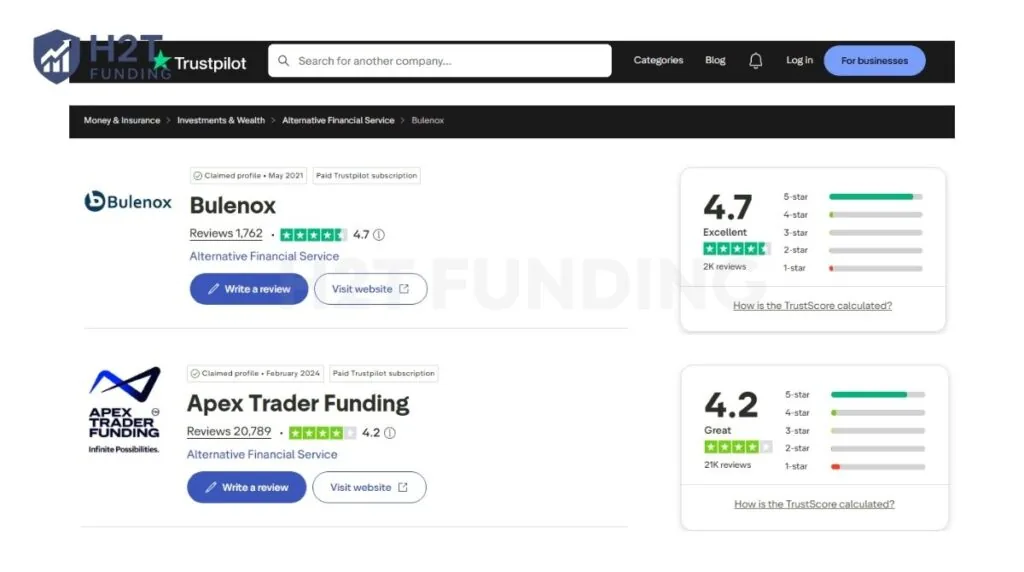
As of August 2026, Bulenox has a 4.7/5 Trustpilot rating from 1,762 reviews, while Apex Trader Funding has 4.2/5 from 20,789 reviews. Bulenox reviews frequently mention reliable payouts and responsive support, while Apex reviews praise clear rules and successful payouts but also include complaints about payout timing and support delays.
“Got my 8th payout since I started trading with Bulenox, the customer service responses have been fast!” – Futures Scalper, Trustpilot review
“Just received my first payout from Apex today 🙂 … A real A++ experience.” – Scott Dz, Trustpilot review

6.2. Reddit community sentiment
Reddit feedback is more divided than Trustpilot for both firms. Bulenox traders commonly discuss payouts and the way additional Master Accounts are activated, while Apex discussions frequently focus on payout rules and account restrictions.
For Bulenox, one trader reported a positive payout experience:
“Just got my 4th uncapped payout, paid me no questions asked.” – u/Due-Consequence-799, “Bulenox is LEGIT” on r/PropFirmTester
However, another trader criticized Bulenox’s staged Master Account activation:
“So I basically have 8 master accounts sitting in pending status and will have to stagger them in.” – u/black_lexluthor, “Bulenox Post-Pass Gating” on r/PropFirmTester

Apex receives similarly mixed feedback. One Reddit user defended the firm based on their own experience:
“Apex is fine just follow the rules. I’ve taken many payouts with them.” – u/BrilliantFront4, “Direct Funding Recommendations” on r/PropFirmTester
Other traders remain more cautious about payout enforcement:
“Apex’s rules are too subjective and meant to trip up traders so they … get payouts denied.” – u/Watchuluknat, “Apex trader funding really that bad or is there any good reviews?” on r/Daytrading
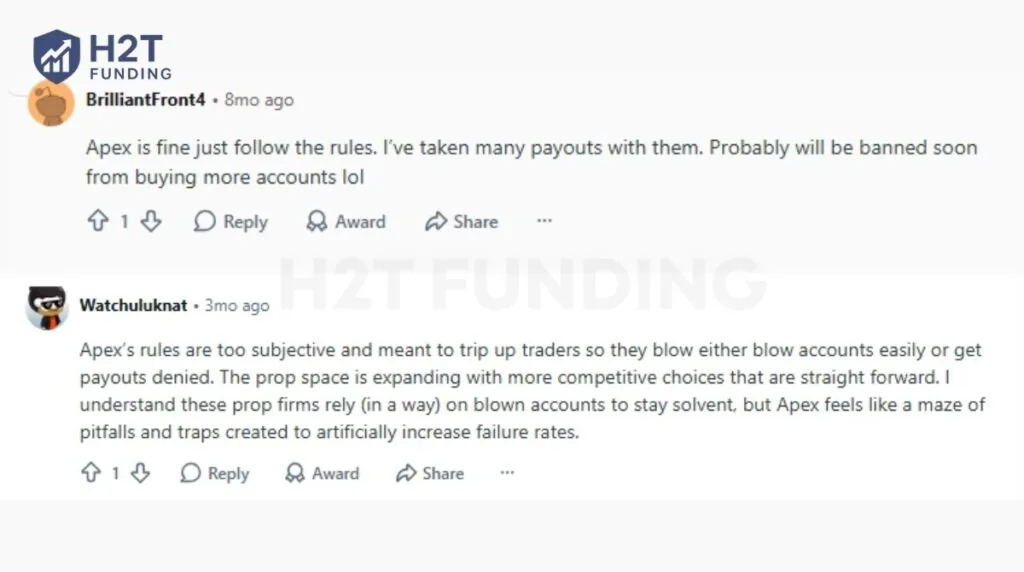
Key comparison: Bulenox has the stronger Trustpilot score, while Apex has far more reviews and therefore a much larger feedback sample. Across Reddit, neither firm receives universally positive feedback: successful payouts are reported for both, but Bulenox attracts criticism around Master Account progression, while Apex attracts more discussion around payout enforcement and account restrictions.
7. Should you choose Bulenox or Apex?
Choose Bulenox if you want more flexibility in how you enter and trade the program; choose Apex if you prefer a more standardized structure with clearer PA scaling and higher multi-account capacity.
Choose Bulenox if you:
- Want multiple entry paths through Qualification, Fast Track, or Momentum.
- Prefer a wider choice of third-party trading platforms through Rithmic.
- Want more choice between Trailing Drawdown and EOD Drawdown structures.
- Prefer program-specific rules rather than one standardized progression.
Choose Apex if you:
- Prefer a simpler choice between Intraday Trailing and EOD programs.
- Want fixed position limits during Evaluations and tier-based scaling in Performance Accounts.
- Plan to manage a larger account setup, with up to 20 active PAs.
- Prefer a more standardized progression across account sizes and funded-stage rules.
In short, Bulenox fits traders who value flexibility, while Apex fits traders who value a more standardized multi-account structure.
8. FAQs
Bulenox can be a good choice for futures traders who value flexible program paths, broad platform support, and both Trailing and EOD drawdown options. However, traders should understand its program-specific rules, Master Account progression, consistency requirements, and payout conditions before joining.
Apex Trader Funding can be a good choice for traders who prefer a standardized futures prop-firm structure, tier-based PA scaling, and high multi-account capacity. Its current rules are relatively structured, but payout consistency, drawdown, and PA requirements still need to be followed carefully.
Yes. Bulenox offers payouts to eligible Master and Funded Account traders who meet its current payout and consistency requirements. Community reports also include traders who have received multiple Bulenox payouts, although individual experiences vary.
No. Bulenox currently uses Rithmic rather than Tradovate as its connection infrastructure. Traders can connect through NinjaTrader and 20+ supported third-party platforms such as Quantower, Sierra Chart, ATAS, and MotiveWave.
Apex introduced its current 50% consistency requirement for Performance Account payouts, replacing the older 30% consistency structure used under previous rules. Under the current rule, a trader’s largest profitable day must remain below 50% of total accumulated profit for the payout period.
The Bulenox “flip-day” complaint is that traders say certain high-impact or unusually profitable days can be flagged during payout review even when they appear to meet the published 40% consistency rule. Some traders report being asked to keep trading additional days to reduce the weight of those days before a payout is approved.
However, Bulenox does not publicly define a formal “flip-day” rule, threshold, or calculation method in its published rules, so “flip day” is best understood as a community term describing payout-review complaints, not an official Bulenox rule name.
Topstep offers a more streamlined progression, while Apex emphasizes multi-account capacity and Bulenox offers more program and platform flexibility. Topstep currently uses a Trading Combine followed by an Express Funded Account and then potential Live Funded Account progression; its Trading Combine has a 50% consistency target, while its XFA offers Standard and 40%-consistency payout paths.
Yes, both Bulenox and Apex allow traders to manage multiple accounts, but trade-copying rules need to be considered separately. Apex allows traders to hold multiple Performance Accounts but prohibits account sharing and copying trades with other traders.
Bulenox also supports multiple-account setups, but traders should check its current copier rules before linking or copying trades across accounts.
9. Final verdict
Bulenox vs Apex is ultimately a choice between flexibility and scale. Bulenox is better suited to traders who value multiple program paths, broader platform support, and more choice in drawdown structures, while Apex Trader Funding is a stronger fit for traders who prefer a more standardized setup, tier-based Performance Account scaling, and the ability to manage more accounts.
Neither firm is automatically the better option for every trader. The right choice depends on your preferred risk model, payout expectations, platform setup, and how aggressively you plan to scale.
For more side-by-side prop firm breakdowns, explore the Comparison category on H2T Funding to see how other firms compare on rules, payouts, platforms, and account structure.